Introduction
If you’ve ever heard a Siberian Husky “talking,” you know it’s not just barking—it’s a full symphony of howls, yodels, whines, and dramatic sighs. While most dogs bark to alert or demand attention, Huskies seem to carry on entire conversations, often with no audience but the moon or their favorite squeaky toy. This expressive vocal nature is one of the breed’s most charming—and sometimes puzzling—traits.
But why are Huskies so uniquely vocal? It’s not noise for noise’s sake. Their communication style is deeply rooted in ancestry, pack behavior, and emotional expression. For current or prospective Husky owners, understanding this trait is essential—not just to manage household peace, but to truly connect with your dog.
In this article, we’ll explore the fascinating reasons behind the Husky’s vocal tendencies, from their wolf-like heritage to their social intelligence. We’ll also share practical tips for living harmoniously with a chatty companion, and explain how to tell the difference between expressive communication and problematic behavior. Whether you’re enchanted or exasperated by your Husky’s “opera performances,” you’ll walk away with a deeper appreciation—and better strategies—for this beautiful, talkative breed.
Ancient Echoes: The Wolf Connection
One of the main reasons Huskies are so vocal lies in their close genetic relationship to wolves. Unlike many modern dog breeds that have been selectively bred for silence, obedience, or specific tasks (like herding or guarding), Siberian Huskies were developed by the Chukchi people of northeastern Asia as sled dogs in harsh Arctic conditions. Their survival depended not on quiet efficiency, but on strong pack communication over long distances.
Wolves rarely bark—they howl to locate pack members, signal territory, or coordinate movement. Huskies inherited this preference for howling over barking. That haunting, melodic sound isn’t “misbehavior”; it’s an ancestral echo. When your Husky throws back their head and sings along to a siren or howls when you leave the room, they’re not being dramatic—they’re using the language of their ancestors.
This trait also explains why Huskies often “talk back.” A low grumble, a high-pitched whine, or a series of soft yips may be their way of saying, “I hear you,” “I disagree,” or “Please don’t go.” It’s not defiance—it’s dialogue.
Fun fact: Huskies are capable of producing over a dozen distinct vocalizations, far more than the average dog.
Pack Mentality and Social Communication
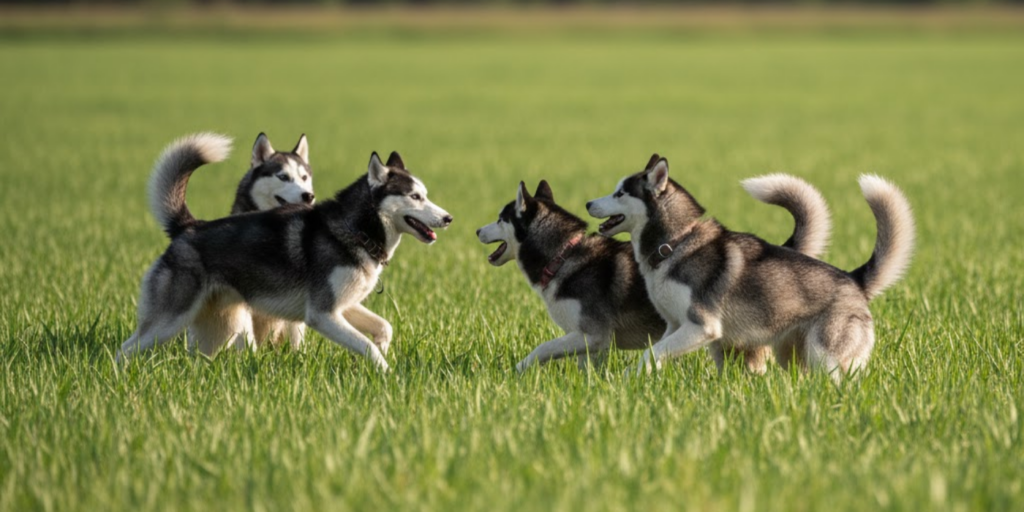
Huskies are intensely social animals. In the wild, sled teams functioned as tight-knit packs, relying on vocal cues to coordinate during long treks across snow and ice. Even today, a Husky views their human family as their pack—and they feel compelled to stay in constant communication.
This is why your Husky might:
- Howl when you play music (they’re joining the “group chorus”)
- Whine when ignored (they’re checking in: “Are we still connected?”)
- “Argue” during training (they’re expressing confusion or frustration—not disobedience)
Unlike breeds that work independently (like livestock guardians), Huskies thrive on interaction. Their vocalizations are often attempts to maintain social bonds or seek clarity. A silent Husky might actually be a sign of stress or disengagement.
Compare this to a Border Collie, who may bark to control sheep, or a Beagle, who bays to signal prey. The Husky’s voice isn’t about control or alert—it’s about connection.
Emotional Expression: More Than Just Noise
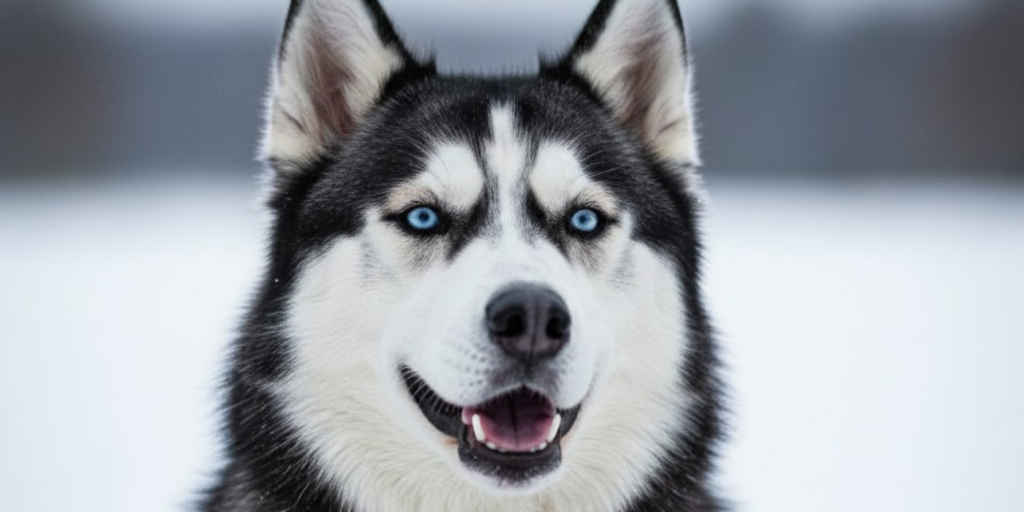
Huskies are famously expressive—not just with their striking blue eyes, but with their voices. They use sound to convey a wide range of emotions:
- Excitement: A series of rapid, high-pitched yips when you grab the leash.
- Frustration: A low, guttural grumble when denied access to the backyard.
- Boredom: Long, drawn-out howls that escalate if ignored.
- Affection: Soft whimpers or sighs while leaning against you on the couch.
Many Husky owners report their dogs “talking” in response to questions: “Do you want dinner?” → “Awoo?” It’s not mimicry—it’s contextual communication. They’ve learned that certain sounds get desired responses.
This emotional intelligence makes Huskies incredibly engaging companions—but it also means they’re sensitive to household dynamics. If there’s tension, loneliness, or inconsistency in routines, they’ll often vocalize it. Their voice becomes a barometer for their emotional well-being.
When Vocalization Becomes a Problem (and How to Manage It)
While Husky “talking” is usually endearing, it can cross into nuisance territory—especially in apartments or neighborhoods with noise-sensitive neighbors. Excessive howling when left alone, for example, may signal separation anxiety, not just boredom.
So how do you honor your Husky’s natural voice while keeping the peace?
1. Provide ample physical and mental exercise
A tired Husky is a quieter Husky. Aim for 1–2 hours of vigorous activity daily—running, hiking, bikejoring, or even doggy backpacking. Mental challenges like puzzle toys or scent games also help drain mental energy.
2. Avoid reinforcing unwanted vocalizations
If your Husky howls for attention and you respond (even to scold), they learn that noise = results. Instead, reward silence. Wait for a quiet moment, then offer praise or a treat.
3. Create a calming routine for alone time
Leave a piece of clothing with your scent, play soft music or white noise, and provide a long-lasting chew (like a frozen Kong). Start with short absences and gradually increase duration.
4. Never punish vocalizations
Yelling or spraying water may suppress the behavior temporarily but damages trust. Huskies respond far better to positive redirection.
5. Teach a “quiet” cue
After your dog vocalizes, say “quiet” calmly and wait. The moment they pause—even for a second—reward them. Repeat consistently, and they’ll learn to associate silence with positive outcomes.
Remember: you’ll never (and shouldn’t try to) eliminate a Husky’s voice. But you can shape when and how it’s used.
Living with a Talkative Companion: Real Owner Experiences

Take Lena from Colorado, whose Husky, Koda, used to howl every time the mail truck passed. Instead of fighting it, she taught him an alternative behavior: when the truck came, he’d go to his mat and chew a toy. Now, he barely glances at the window.
Or consider Marcus in Florida, who records his Husky Luna’s “conversations” and shares them online. “She ‘answers’ when I ask her if she wants a walk,” he laughs. “I know it’s not real speech—but it feels like she’s trying. And that’s the magic of this breed.”
These stories highlight a key truth: Huskies aren’t noisy—they’re communicative. The more you listen, the more you understand.
Embracing the Husky’s Voice as a Gift
Rather than viewing vocalization as a flaw, consider it a window into your Husky’s inner world. Their howls, whines, and yodels reveal joy, curiosity, concern, and love. In a world where many dogs are trained to be silent and obedient, the Husky’s willingness to “speak their mind” is refreshingly authentic.
That said, responsible ownership means balancing natural instincts with household harmony. By meeting their physical, mental, and emotional needs, you’ll reduce stress-related vocalizing and amplify the joyful, expressive sounds that make Huskies so unforgettable.
After all, who wouldn’t want a dog that doesn’t just wag their tail—but sings you a song while doing it?
Conclusion
The Siberian Husky’s vocal nature isn’t a quirk—it’s a core part of their identity, shaped by thousands of years of evolution, pack cooperation, and emotional intelligence. From ancestral howls to modern-day “conversations,” their voice is a form of connection, not chaos.
Understanding why they vocalize—whether it’s to bond, express emotion, or echo their wild roots—helps you respond with empathy rather than frustration. And with the right balance of exercise, training, and companionship, you can enjoy their expressive communication without it becoming overwhelming.
If you’re lucky enough to share your life with a Husky, lean into their language. Listen closely. You might just find they’re saying exactly what you need to hear.
Now we’d love to hear from you: Does your Husky have a signature sound? A howl for dinner? A grumble for bath time? Share your favorite “Husky conversation” in the comments below—and if you know someone considering this breed, pass this along so they go in with eyes (and ears!) wide open. Because living with a Husky isn’t just about owning a dog—it’s about joining a duet.

Mary Brown is a devoted pet enthusiast with a lifelong passion for animals of all kinds. From volunteering at local shelters to creating cozy, enriching spaces for her own furry family, she believes that every pet deserves love, comfort, and attentive care. With years of hands-on experience and a heart full of empathy, Mary shares practical tips and heartfelt insights to help fellow pet parents nurture happier, healthier lives for their companions.