
You notice it first as a few flakes on your black dog’s back. Then comes the scratching—constant, restless, sometimes frantic. Before long, there are red patches, chewed paws, or even raw, weepy sores. Your heart aches. You know your dog is uncomfortable, but you’re not sure why—or what to do.
If your dog has sensitive skin, you’re not alone. Up to 15% of dogs suffer from skin conditions, ranging from mild dryness to chronic allergies (American College of Veterinary Dermatology). And while it’s tempting to reach for the strongest medicated shampoo or the latest “miracle” supplement, the real solution often lies in gentle, consistent, holistic care.
The good news? With a few thoughtful changes to your routine, you can soothe irritation, strengthen your dog’s natural skin barrier, and prevent flare-ups—without harsh chemicals or endless vet bills.
In this guide, you’ll learn simple, vet-approved steps to care for your dog’s sensitive skin, including:
- How to choose the right shampoo and grooming products
- The role of diet and hydration
- Environmental triggers to avoid
- When to seek professional help
Because your dog deserves to feel comfortable in their own skin—every single day.
Why Sensitive Skin Happens (It’s Not Just “Bad Genes”)
Many dog owners assume sensitive skin is just a breed trait (looking at you, Bulldogs and Westies). But while some dogs are genetically prone to skin issues, environment, diet, and care play an even bigger role.
Common causes of sensitive skin include:
- Allergies (food, pollen, dust mites, flea saliva)
- Dry air (especially in winter or air-conditioned homes)
- Harsh grooming products (soaps, perfumes, human shampoos)
- Poor nutrition (lack of essential fatty acids)
- Parasites (fleas, mites, ticks)
- Over-bathing (strips natural oils)
Important: Scratching isn’t just “annoying”—it breaks the skin, inviting bacteria and yeast. Left untreated, a small itch can become a painful infection.
“I thought my dog just had ‘dry skin.’ Turned out she was allergic to her chicken-based food—and the shampoo I was using made it worse.” — Lisa, owner of a French Bulldog
The key insight: Sensitive skin is a symptom—not a life sentence. With the right approach, most dogs see dramatic improvement in weeks.
Step 1: Switch to a Gentle, Hypoallergenic Shampoo
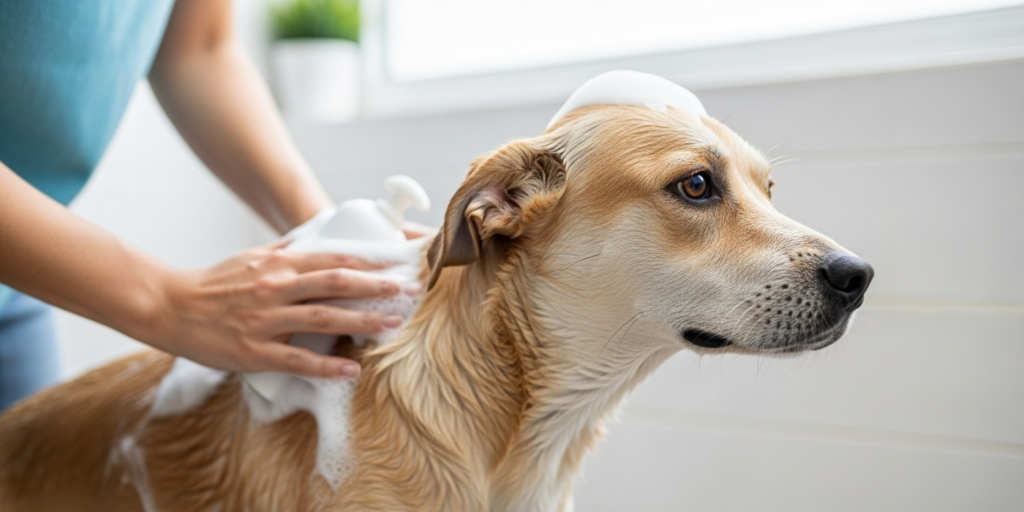
One of the fastest ways to soothe (or worsen) sensitive skin is through bathing.
Avoid:
- Human shampoos (pH 5.5 vs. dog’s pH 6.2–7.4—they disrupt skin balance)
- Shampoos with fragrance, dyes, sulfates, or alcohol
- “Medicated” shampoos unless prescribed (they can over-dry)
Look for:
- Colloidal oatmeal – natural anti-itch, anti-inflammatory
- Aloe vera – cooling and healing
- Ceramides or fatty acids – restore skin barrier
- Hypoallergenic, soap-free formulas
Top vet-recommended brands:
- Vet’s Best Oatmeal Shampoo
- Earthbath Hypo-Allergenic
- Douglas Ingredients Aloveen (for severe allergies)
- Veterinary Formula Clinical Care Antipruritic
Bathing tips:
- Bathe only every 3–6 weeks (unless directed otherwise by a vet)
- Use lukewarm water—hot water dries skin
- Rinse thoroughly—residue causes more irritation
- Towel-dry gently—no rubbing
Bonus: Add 1 cup of plain colloidal oatmeal to a lukewarm bath for an at-home soothing soak.
Step 2: Moisturize from the Inside Out with Omega Fatty Acids
Healthy skin starts not on the surface, but within. And one of the most powerful tools for sensitive skin is omega-3 and omega-6 fatty acids.
These essential fats:
- Reduce inflammation
- Strengthen the skin barrier
- Improve coat luster
- Decrease itching by up to 30% (Journal of the American Veterinary Medical Association)
Best sources:
- Fish oil (rich in EPA/DHA)—the gold standard
- Flaxseed or chia seeds (for plant-based ALA—less effective but better than nothing)
- Eggs (from pasture-raised hens—contain biotin and fats)
How to choose a quality supplement:
- Look for third-party testing (IFOS or NASC certified)
- Choose enteric-coated capsules or liquid to prevent fishy burps
- Dose based on EPA, not total oil (ask your vet)
“After 6 weeks of fish oil, my dog stopped chewing her paws. Her coat went from dull to shiny.” — Marcus, owner of a Shih Tzu
Pro tip: Add 1 tsp of plain canned sardines (in water, no salt) to meals 2–3x/week for a natural boost.
Step 3: Identify and Eliminate Environmental Triggers
Sometimes, the problem isn’t your dog—it’s their surroundings.
Common hidden irritants:
- Flea saliva (even one bite can cause massive itching in allergic dogs)
- Pollen (wipes on paws after walks help!)
- Household cleaners (opt for vinegar, baking soda, or pet-safe brands like Branch Basics)
- Laundry detergent (use fragrance-free, hypoallergenic formulas for dog beds and your clothes)
Simple changes that help:
✅ Wipe paws after walks with a damp cloth to remove pollen and chemicals
✅ Wash bedding weekly in hot water with unscented detergent
✅ Use a HEPA air purifier to reduce airborne allergens
✅ Keep grass short—long grass holds more pollen and pests
For fleas: Use vet-recommended preventatives year-round. Even indoor dogs get fleas—and flea allergy dermatitis is the #1 cause of itchy skin.
Step 4: Support Skin Health Through Diet
Food allergies (to chicken, beef, dairy, or wheat) can manifest as skin issues—not just digestive upset.
Signs of food-related skin problems:
- Itching around face, paws, or ears
- Recurrent ear infections
- Poor response to environmental allergy treatments
What to do:
- Try a limited-ingredient diet (LID) with a novel protein (like duck, venison, or rabbit) and single carb source (sweet potato, peas).
- Eliminate treats and table scraps during the trial (8–12 weeks).
- Work with your vet—DIY elimination diets often fail due to hidden ingredients.
Top vet-approved LID brands:
- Hill’s Prescription Diet z/d (hydrolyzed protein—best for true allergies)
- Royal Canin Hydrolyzed Select
- Natural Balance LID (over-the-counter option)
Hydration matters too: Always provide fresh, clean water. Dehydration worsens dry skin.
Step 5: Know When to Call the Vet (Don’t Wait!)

While home care helps many dogs, some skin issues need professional diagnosis.
See your vet if you notice:
- Red, raw, or oozing patches
- Hair loss in patches
- Foul odor from skin or ears
- No improvement after 2–3 weeks of consistent home care
These could signal:
- Bacterial or yeast infections
- Mange (mites)
- Autoimmune disorders
- Hormonal imbalances (like hypothyroidism)
Never use:
- Over-the-counter human creams (like hydrocortisone)—many contain ingredients toxic if licked
- Essential oils (tea tree, lavender)—can cause severe poisoning in dogs
Your vet may recommend:
- Skin scrapings or allergy testing
- Prescription shampoos or medications
- Apoquel or Cytopoint for severe itching (safe and effective)
“I delayed the vet visit for months. Once we treated her yeast infection, she stopped scratching overnight.” — Tanya, owner of a Cocker Spaniel
Prevention Is a Daily Habit—Not a One-Time Fix
Caring for sensitive skin isn’t about quick fixes. It’s about building a lifestyle of gentle, consistent care that supports your dog’s natural health.
That daily paw wipe. The weekly brush with a soft slicker. The fish oil added to dinner. These small acts add up to big relief—less itching, better sleep, and more wagging.
And perhaps most importantly, they say to your dog: “I see your discomfort, and I’m here to help.”
Final Thoughts: Comfort Is a Form of Love
Your dog can’t tell you their skin hurts. They show you—with a lick, a scratch, a restless night. By responding with patience, knowledge, and kindness, you’re not just treating a symptom—you’re honoring their trust in you.
So start small. Try one change this week. Watch for signs of relief. And celebrate every moment your dog lies down in peace—itch-free, calm, and content.
Now we’d love to hear from you: What’s your go-to remedy for your dog’s sensitive skin? Have you found a shampoo or supplement that works wonders? Share your tip in the comments—your advice could bring relief to another dog (and their worried human)!

Mary Brown is a devoted pet enthusiast with a lifelong passion for animals of all kinds. From volunteering at local shelters to creating cozy, enriching spaces for her own furry family, she believes that every pet deserves love, comfort, and attentive care. With years of hands-on experience and a heart full of empathy, Mary shares practical tips and heartfelt insights to help fellow pet parents nurture happier, healthier lives for their companions.