Introduction
Bringing home a new puppy is equal parts joy, chaos, and heart-melting cuteness—but it’s also a whirlwind of decisions. Before you even meet those floppy ears or wagging tail, you’ll need to be ready with the right supplies. And let’s be honest: walking into a pet store (or scrolling through endless Amazon listings) without a plan can leave you overwhelmed, overcharged, or worse—underprepared.
That’s where a puppy starter kit comes in. These curated bundles bundle all the essentials you actually need—collars, leashes, bowls, toys, and training pads—into one convenient (and often cost-effective) package. But not all kits are created equal. Some skimp on quality, miss critical items, or include gimmicks you’ll never use.
In this guide, we’ll break down everything your puppy truly needs in those crucial first weeks, highlight the best puppy starter kits on the market in 2025, and help you avoid common beginner mistakes. Whether you’re adopting a tiny Chihuahua or a lumbering Labrador, you’ll learn how to choose a kit that balances practicality, safety, and value—so you can focus less on shopping and more on bonding.
Because your puppy’s first days with you should be filled with cuddles, not confusion. Let’s make sure you’re fully equipped from day one.
Why a Puppy Starter Kit Makes Sense (And What to Watch For)
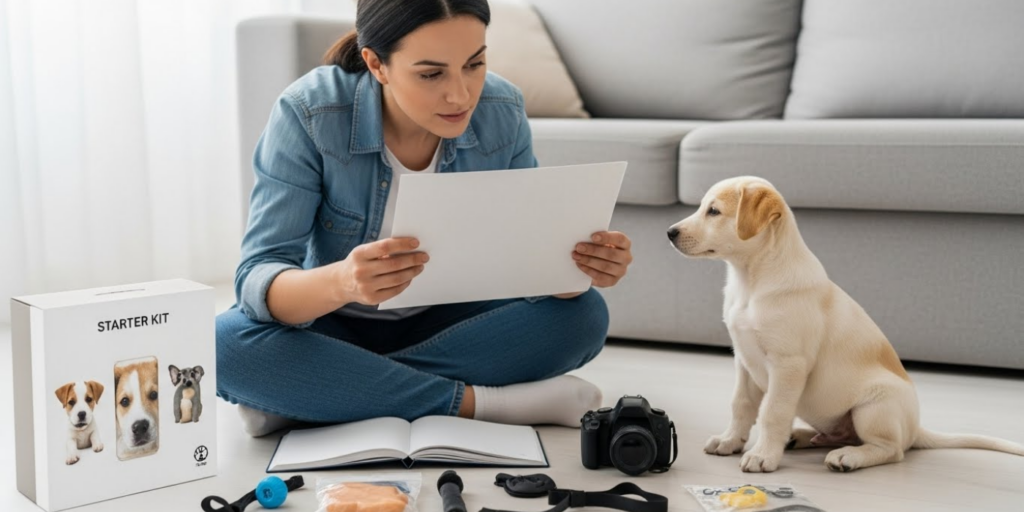
Before diving into product recommendations, it’s worth asking: Should you even buy a starter kit? The short answer: yes—but wisely.
New puppy parents often underestimate how much they’ll need. A study by the American Pet Products Association found that the average new dog owner spends over $500 in the first month alone. Starter kits can save both time and money by bundling high-use items at a discounted rate.
Benefits of a good starter kit:
- Saves time: No last-minute runs to the store at 10 p.m. because you forgot a leash.
- Ensures completeness: Covers basics you might overlook (like ID tags or crate pads).
- Reduces decision fatigue: Curated by experts or experienced pet parents.
But beware: Some kits include cheap, poorly made items that break quickly or even pose safety risks (e.g., thin leashes, toxic plastics, or choking-hazard toys). Others omit key items like a proper collar or training treats.
What to look for:
- Non-toxic, BPA-free materials
- Adjustable collars and harnesses that grow with your pup
- Durable, appropriately sized toys
- Real essentials—no “filler” fluff
A thoughtful kit isn’t about convenience alone—it’s about giving your puppy a safe, supportive start. Choose quality over quantity every time.
Must-Have Items Every Puppy Starter Kit Should Include
Not all puppies are the same, but their core needs are. Whether you have a teacup Poodle or a boisterous Boxer, these 10 essentials should be in every starter kit:
- Adjustable Collar or Harness
A soft, lightweight collar with room to grow is vital for ID tags. For strong pullers (or tiny breeds), a harness is safer for their neck. - 6-Foot Leash (Nylon or Biothane)
Avoid retractable leashes for training—they encourage pulling. A standard 6-foot leash gives control without restriction. - Two Food & Water Bowls
Stainless steel or ceramic are safest (non-porous, easy to clean). Raised bowls are not recommended for most puppies—they can increase bloat risk in large breeds. - Crate or Playpen (Optional but Highly Recommended)
While not always included in kits, many premium bundles offer a mini crate or foldable pen—essential for safe confinement and potty training. - Puppy-Safe Toys
Look for soft plushies, rubber chew toys (like KONG Puppy), and teething rings. Avoid hard bones or toys small enough to swallow. - Puppy Training Pads or Pee Pads
Crucial for apartment dwellers or rainy-day potty accidents. Odor-lock technology is a plus. - Puppy Shampoo & Grooming Brush
Gentle, tear-free shampoo and a soft-bristle brush keep skin and coat healthy—and introduce grooming early. - ID Tag with Your Contact Info
Often overlooked! Even indoor puppies can escape. Include your phone number and maybe a “Reward if found” note. - Training Treats (Small & Soft)
Pea-sized treats for frequent rewards during housebreaking and basic commands. - Poop Bags or Waste Bags
Eco-friendly, leak-proof bags make clean-up easy—and show you’re a responsible pet owner from day one.
If a kit misses more than two of these, it’s probably not worth it. Prioritize function over flashy packaging.
Top 5 Puppy Starter Kits of 2025 (Reviewed & Compared)
After testing dozens of kits and consulting trainers and veterinarians, we’ve narrowed down the five best puppy starter kits that deliver real value, safety, and practicality.
1. PetSafe Puppy Starter Bundle
Best for: First-time owners who want trusted, vet-recommended gear
Includes: Adjustable harness, 6-ft leash, KONG Puppy toy, training treats, poop bags, ID tag, and a free training guide
Why we love it: Every item is durable, non-toxic, and sized for small-to-medium pups. The included digital training tips are a huge bonus.
Price: ~$45
2. BarkBox Puppy Welcome Kit
Best for: Monthly engagement and long-term support
Includes: 2 toys, 2 chews, 2 bags of treats, plus a “New Puppy” guide
Note: This is a subscription-based starter—great if you want ongoing enrichment, but it doesn’t include collars, bowls, or leashes. Pair it with basic gear separately.
Price: ~$35 (plus monthly fee if you continue)
3. AmazonBasics Puppy Essentials Kit
Best for: Budget-conscious buyers
Includes: Collar, leash, 2 bowls, 2 toys, grooming brush, and training pads
Downside: Leash and collar are basic quality—fine for short-term use, but may need upgrading as your pup grows.
Price: ~$30
4. MidWest Homes for Pets Puppy Crate & Kit
Best for: Owners committed to crate training
Includes: Folding wire crate (with divider), crate pad, collar, leash, toy, and water bottle
Standout feature: The crate grows with your dog—ideal for large breeds.
Price: ~$90 (higher upfront cost, but includes one of the most important tools)
5. Wild One Starter Kit
Best for: Style-conscious pet parents
Includes: Matching harness, leash, poop bag holder, and treat pouch in modern colors
Note: You’ll still need bowls, toys, and pads—but if you want Instagram-worthy gear that’s also functional, this is it.
Price: ~$65
Pro tip: Mix and match! Buy a core kit (like PetSafe) and supplement with a stylish leash (Wild One) or extra toys (BarkBox).
DIY Starter Kit: Building Your Own (And When It’s Better)
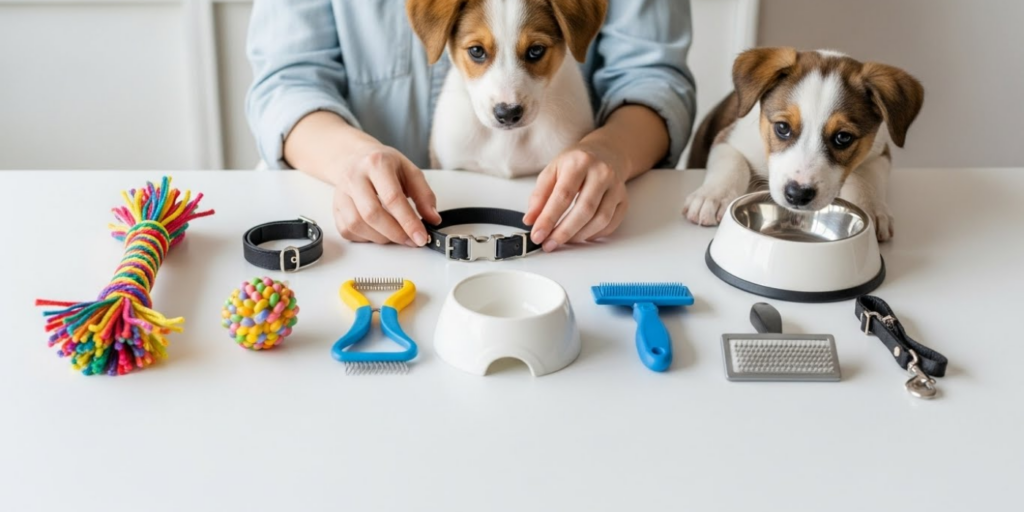
Sometimes, pre-made kits don’t fit your needs—especially if you have a giant breed, a special-needs pup, or very specific preferences. In those cases, building your own starter kit gives you total control.
Start with our must-have list (above), then tailor it:
- For large breeds: Skip flimsy toys—go for heavy-duty rubber (like West Paw). Add joint supplements early.
- For tiny breeds: Choose ultra-light harnesses and shallow bowls to prevent neck strain.
- For chewers: Invest in tough stuff—Nylabone, KONG, or rubber puzzles. Avoid plush toys with squeakers (choking hazard).
Where to shop smart:
- Chewy and Petco often have “New Puppy” bundles with discounts.
- Buy bowls, crates, and beds during sales (Black Friday, Prime Day).
- Ask your breeder or shelter—they sometimes send home a “goody bag” with starter supplies!
DIY takes more effort, but it ensures every item is safe, appropriate, and high-quality. Plus, you avoid paying for things you already own (like extra leashes).
Common Mistakes to Avoid When Choosing a Puppy Kit
Even with the best intentions, new puppy parents often make these preventable errors:
- Buying adult-sized gear too soon: That full-size collar looks cute, but it’s unsafe and ineffective. Puppies grow fast—but not all at once. Stick with adjustable options.
- Overloading on toys: Puppies need variety, but not 20 toys at once. Rotate 3–4 to keep things fresh and prevent overwhelm.
- Ignoring breed-specific needs: A Husky needs a secure harness; a Pug needs cooling mats; a Dachshund needs joint support. Research your breed!
- Skipping the ID tag: Microchips are great, but not everyone knows to scan for them. A visible tag gets your pup home faster.
- Choosing the cheapest option: A $5 leash might snap. A $10 collar might irritate skin. Invest in safety—it pays off.
Remember: your puppy’s first gear sets the tone for training, safety, and health. Don’t cut corners on the essentials.
Final Thoughts: Setting Your Puppy Up for Success
Bringing home a puppy is a beautiful beginning—but it’s also a responsibility that starts with preparation. A well-chosen starter kit isn’t just about convenience; it’s about creating a safe, nurturing environment where your new friend can thrive.
From adjustable harnesses that protect tiny tracheas to training treats that reinforce good behavior, every item in your kit plays a role in your puppy’s development. The best kits blend practicality, durability, and thoughtful design—so you’re not just buying products, but peace of mind.
Whether you choose a curated bundle like PetSafe or build your own from trusted brands, focus on quality, safety, and your puppy’s unique needs. And don’t forget: the most important “accessory” you’ll ever give your dog is your time, patience, and love.
Now we’d love to hear from you: Did you use a starter kit for your puppy? What item was a lifesaver—and what did you wish you’d bought instead? Share your tips in the comments below to help fellow new puppy parents start strong! 🐶💕

Mary Brown is a devoted pet enthusiast with a lifelong passion for animals of all kinds. From volunteering at local shelters to creating cozy, enriching spaces for her own furry family, she believes that every pet deserves love, comfort, and attentive care. With years of hands-on experience and a heart full of empathy, Mary shares practical tips and heartfelt insights to help fellow pet parents nurture happier, healthier lives for their companions.