Introduction
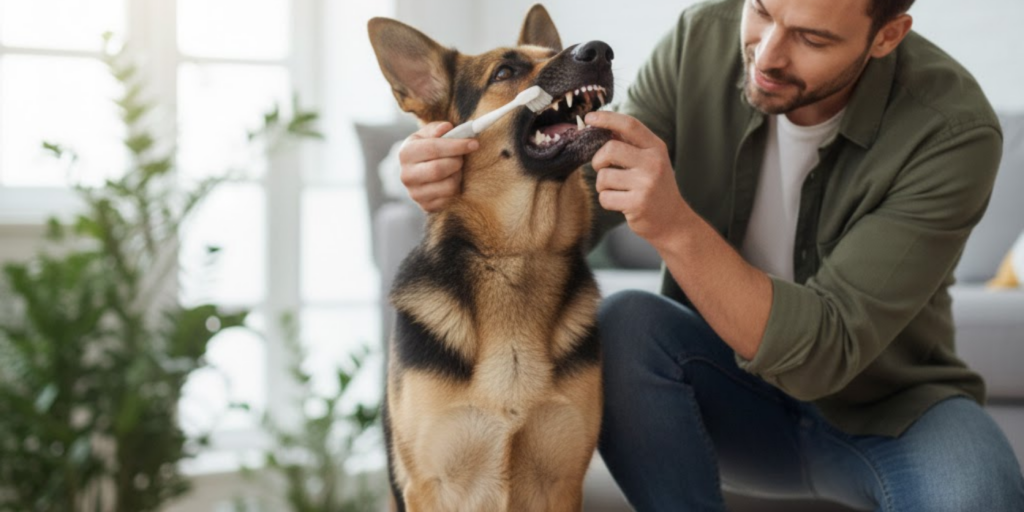
Let’s be honest—most of us wouldn’t skip brushing our own teeth for months on end. Yet, when it comes to our dogs, dental care often falls to the bottom of the to-do list. Maybe it’s because we’re unsure how to do it, or we’ve been met with a lip curl, a head turn, or an outright growl. But here’s the truth: by age 3, over 80% of dogs show signs of dental disease, according to the American Veterinary Dental College. And that’s not just about bad breath—it’s linked to heart, kidney, and liver problems.
The good news? Brushing your dog’s teeth isn’t just possible—it can become a calm, even bonding part of your routine. And you don’t need to be a vet or a dog trainer to do it right. With the right tools, timing, and gentle approach, you can protect your pup’s health and avoid costly cleanings (or worse, tooth extractions).
In this guide, we’ll walk you through everything you need to know: why dental care matters, how to choose the right supplies, and—most importantly—a step-by-step plan to teach your dog to accept (and maybe even enjoy!) toothbrushing. Whether you have a wiggly puppy or a senior dog who’s never had a toothbrush near them, these practical tips will set you up for success.
Let’s turn dental care from a chore into a gift—one that keeps your dog smiling for years to come.
Why Your Dog’s Dental Health Matters More Than You Think
It’s easy to dismiss doggy breath as “just how dogs smell.” But that odor is often the first sign of something serious: plaque buildup, gum inflammation (gingivitis), or full-blown periodontal disease.
Unlike humans, dogs rarely get cavities—but they’re far more prone to gum disease. Plaque hardens into tartar within days, creeping under the gumline and causing infection. Left untreated, it destroys the structures holding teeth in place, leading to pain, loose teeth, and even bone loss.
Even scarier? Bacteria from infected gums can enter the bloodstream and travel to vital organs. Studies have shown links between poor oral health and heart, kidney, and liver disease in dogs—especially in small breeds and seniors.
Consider this: A routine dental cleaning under anesthesia can cost anywhere from $300 to $1,000+, not to mention the stress on your dog. In contrast, daily brushing at home costs pennies and prevents most issues before they start.
Moreover, dogs are masters at hiding pain. Your pup might be eating fine but still suffering silently. That’s why prevention is everything—and brushing is the single most effective thing you can do at home.
Step 1: Gather the Right Tools (No Human Toothpaste!)
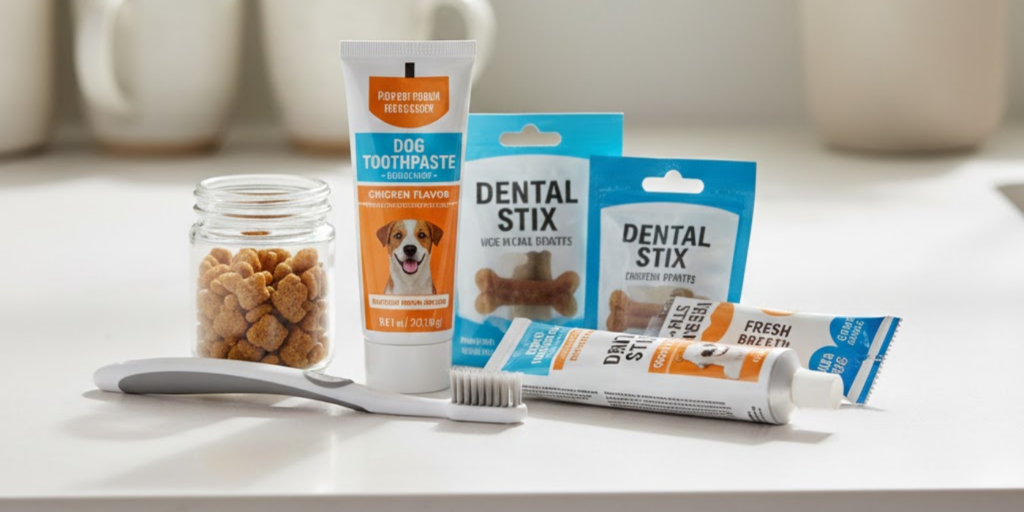
Before you even think about brushing, make sure you have the correct supplies. Using the wrong products can be ineffective—or even dangerous.
Essential items:
- Dog-specific toothpaste: Never use human toothpaste! It contains fluoride, xylitol, and other ingredients that are toxic to dogs. Dog toothpaste comes in flavors like poultry, beef, or peanut butter—making it way more appealing.
- A dog toothbrush: Options include:
- Finger brushes (great for small dogs or beginners)
- Soft-bristled pet toothbrushes (angled handles help reach back teeth)
- Children’s toothbrushes (if your dog is large and tolerant)
- Gauze or dental wipes: Helpful during the “getting used to it” phase, though less effective than brushing.
Pro tip: Let your dog lick a bit of toothpaste off your finger first—no brushing, just tasting. This builds positive associations from day one.
Avoid “miracle” dental chews or water additives as your only solution. While they can supplement care, the Veterinary Oral Health Council (VOHC) confirms that only brushing physically removes plaque before it hardens.
Think of it like this: dental chews are like mouthwash for humans—nice, but no replacement for flossing and brushing.
Step 2: Start Slow—Build Trust Before Touching Teeth
Rushing into brushing is the #1 reason dog owners give up. If your dog flinches or resists, it’s not stubbornness—it’s fear or discomfort. The secret? Make it a gradual, positive experience.
Follow this 7-day “foundation” plan (adjust as needed for your dog’s pace):
Days 1–2: Gently lift your dog’s lips while they’re relaxed (after a walk or nap). Offer praise and a treat. Do this 2–3 times a day for just 5–10 seconds.
Days 3–4: Rub your finger along their gums and teeth with a dab of toothpaste. Focus on the front teeth first—less sensitive than molars.
Days 5–6: Introduce the finger brush or toothbrush—but just let them smell and lick it. Then, brush 2–3 front teeth in gentle circles. Stop before they get annoyed.
Day 7+: Gradually increase the number of teeth. Aim for 30–60 seconds total, focusing on the outer surfaces (where plaque builds up most).
Key rules:
- Always work at your dog’s pace. If they pull away, stop and try again later.
- Keep sessions short and upbeat—end on a success.
- Never force or scold. This isn’t obedience—it’s trust-building.
One owner, Jen, spent two weeks just getting her rescue terrier, Benny, comfortable with lip lifts. By week three, he was lying down calmly for full brushing sessions. Patience pays off.
Step 3: Master the Technique—Less Is More
You don’t need to brush like a dentist. In fact, 30 seconds of focused brushing beats 5 minutes of struggle.
Here’s the simple method:
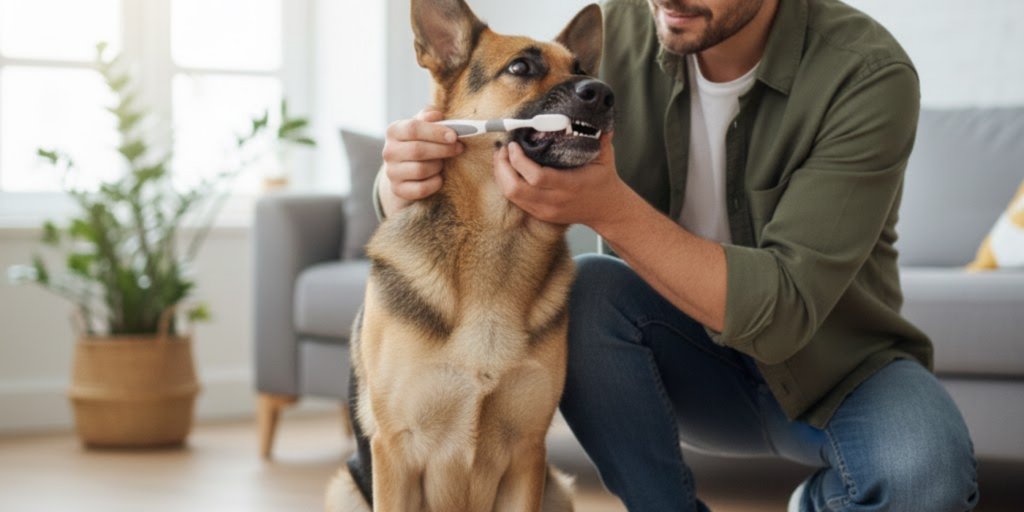
- Lift the upper lip gently.
- Hold the brush at a 45-degree angle to the gumline.
- Use small, circular motions on the outer surfaces of the teeth—focus on the molars and canines (plaque loves these!).
- Don’t worry about the insides or chewing surfaces; the tongue and chewing action clean those naturally.
Frequency matters more than perfection: Aim for at least 3–4 times per week, ideally daily. Even brushing every other day significantly reduces plaque buildup.
And remember: no rinsing needed. Dog toothpaste is safe to swallow—so let it do its job after brushing.
Bonus tip: Brush after meals or during your own routine (e.g., while you brush your teeth). This builds consistency—and your dog may start “reminding” you it’s time!
Troubleshooting Common Challenges
Even with the best plan, you might hit roadblocks. Here’s how to handle them:
“My dog won’t let me near their mouth!”
Go back to Step 2. Spend extra days on desensitization. Try during calm moments—never when they’re excited or guarding space.
“They chew the brush instead of letting me brush!”
Use a finger brush or wrap gauze around your finger. Keep sessions under 20 seconds until they learn it’s not a toy.
“They have bad breath even after brushing.”
This could signal existing dental disease. Schedule a vet check—brushing helps, but it won’t reverse advanced tartar or infection.
“My dog is older and has never been brushed.”
It’s never too late! Just move slower. For seniors with pain, ask your vet about a pre-brushing pain reliever or professional cleaning first.
Most importantly: Celebrate tiny wins. One tooth brushed calmly is progress. Consistency over time builds lasting habits.
Beyond the Brush: Supporting Dental Health Holistically
While brushing is the gold standard, you can boost your dog’s oral health with smart lifestyle choices:
- VOHC-approved dental chews: Look for the VOHC seal—they’ve been clinically proven to reduce plaque and tartar.
- Quality diet: Dry kibble is slightly better than wet food for scraping teeth, but diet alone won’t prevent disease.
- Regular vet check-ups: Ask your vet to examine your dog’s mouth at every visit. Early detection saves teeth—and money.
- Water additives (as a supplement): Products like Oxyfresh can help reduce bacteria, but never rely on them alone.
Think of it like your own dental routine: brushing is essential, but flossing, cleanings, and diet all play supporting roles.
And remember: a healthy mouth means a happier dog. Less pain, better appetite, more energy—and fewer vet bills.
Conclusion: A Small Habit with Lifelong Rewards
Brushing your dog’s teeth might feel awkward at first, but it’s one of the most loving things you can do for them. You’re not just fighting plaque—you’re protecting their heart, kidneys, and overall quality of life. And with a little patience, what starts as a challenge can become a quiet, trusting moment between you and your best friend.
We’ve covered why dental health matters, how to choose safe tools, and a gentle, proven method to teach your dog to accept brushing—even if they’ve never had it before. Remember: go slow, keep it positive, and focus on consistency over perfection.
You don’t need to be perfect. You just need to start.
So tonight, after dinner, try letting your dog taste a bit of poultry toothpaste off your finger. That’s step one. In a few weeks, you might just find them leaning in for their brushing session—tail wagging, breath fresher, and smile brighter.
We’d love to hear from you: Have you tried brushing your dog’s teeth? What worked—or didn’t? Share your tips or questions in the comments below! And if this guide helped you, please share it with a fellow dog lover. Together, we can help more dogs live longer, healthier, happier lives—one tooth at a time.

Mary Brown is a devoted pet enthusiast with a lifelong passion for animals of all kinds. From volunteering at local shelters to creating cozy, enriching spaces for her own furry family, she believes that every pet deserves love, comfort, and attentive care. With years of hands-on experience and a heart full of empathy, Mary shares practical tips and heartfelt insights to help fellow pet parents nurture happier, healthier lives for their companions.