Introduction
If you’ve ever walked into your living room only to find a fur-covered couch, drifted tumbleweeds of hair across the floor, or discovered dog hair on your morning coffee mug—you’re not imagining things. Your dog is simply doing what nature intended: seasonal shedding.
Twice a year—typically in spring and fall—many dogs “blow their coat,” shedding their dense winter fur for a lighter summer one or growing a thick undercoat to prepare for colder months. While completely normal, this natural process can feel overwhelming for pet parents drowning in fluff.
But shedding doesn’t have to mean surrendering your black clothes or vacuuming three times a day. With the right care, grooming routine, and a few smart lifestyle tweaks, you can manage seasonal shedding effectively—while keeping your dog healthy, comfortable, and happy.
In this guide, we’ll explore why dogs shed seasonally, how to distinguish normal shedding from problematic hair loss, and most importantly, practical, vet-approved strategies to reduce mess, support skin and coat health, and even strengthen your bond through grooming. Whether you have a fluffy Husky, a double-coated Shepherd, or a wiry terrier, these tips will help you navigate shedding season with confidence—and far less lint roller.
Why Dogs Shed Seasonally (And What’s Normal)

Not all shedding is created equal. While some breeds shed year-round (looking at you, Labrador!), seasonal shedders experience dramatic coat changes tied to daylight and temperature—not just the calendar.
As days get longer and warmer in spring, your dog’s body receives signals to shed their thick winter undercoat to stay cool. In fall, shorter days and cooler temps trigger regrowth of that insulating layer. This biological rhythm is called photoperiodism, and it’s why even indoor dogs—who live in climate-controlled homes—still shed seasonally.
Breeds most prone to heavy seasonal shedding include:
- Siberian Huskies
- German Shepherds
- Golden Retrievers
- Alaskan Malamutes
- Samoyeds
But here’s the key: normal shedding is symmetrical and doesn’t cause bald patches, redness, or excessive scratching. If your dog is losing hair in clumps, has scaly skin, or seems itchy, it could signal allergies, parasites, hormonal imbalances, or stress—not just seasonal change.
When in doubt, consult your vet. A quick check-up can rule out underlying issues and give you peace of mind that you’re dealing with natural shedding, not a health problem.
Understanding the why behind the fur storm helps you respond with care—not panic.
Grooming: Your First Line of Defense
If you take away one thing from this article, let it be this: brushing is your best friend during shedding season. Regular grooming doesn’t just reduce hair around your home—it’s essential for your dog’s health and comfort.
Why? Because loose undercoat trapped against the skin can lead to matting, hot spots, and poor temperature regulation. It also prevents airflow, which may cause overheating in summer or irritation in winter.
Choose the right tools:
- Undercoat rake: Ideal for double-coated breeds (e.g., Huskies, Shepherds). It reaches deep to remove dead undercoat without damaging top guard hairs.
- Slicker brush: Great for medium to long-haired dogs to detangle and smooth the outer coat.
- Deshedding tool (like the Furminator): Use 1–2 times a week—not daily, as overuse can damage healthy hair.
Brushing frequency:
- Heavy shedders: Daily or every other day during peak season
- Moderate shedders: 2–3 times per week
- Always brush outside if possible—your vacuum will thank you!
Make it a positive experience: offer treats, use calm praise, and keep sessions short. Many dogs learn to love grooming—it’s bonding time with a purpose.
And remember: never shave a double-coated dog. Their topcoat protects against sunburn and insulates in both heat and cold. Shaving disrupts this system and can lead to long-term coat damage.
Nutrition and Hydration: Fuel for a Healthy Coat
You can brush all day, but if your dog’s diet lacks key nutrients, their coat will suffer—and shedding may worsen. Skin and fur thrive on proper nutrition, and seasonal coat changes demand extra support.
Essential nutrients for coat health:
- Omega-3 and Omega-6 fatty acids: Reduce inflammation, moisturize skin, and strengthen hair follicles. Found in fish oil, flaxseed, and high-quality dog foods labeled for skin/coat support.
- High-quality protein: Hair is made of keratin, a protein. Ensure your dog’s food lists real meat (chicken, beef, fish) as the first ingredient.
- Zinc and biotin: Support cell regeneration and shine.
Consider adding a vet-approved fish oil supplement during shedding season—many pet parents report noticeable improvements in coat texture and reduced shedding within 4–6 weeks.
Hydration matters too. Dry skin flakes more easily, leading to increased hair loss. Always provide fresh, clean water, and consider adding bone broth (unsalted, onion-free) to meals for extra moisture and nutrients.
Avoid heavily processed foods or those high in fillers like corn, soy, or artificial preservatives—they offer little nutritional value and can trigger sensitivities that manifest as skin issues.
A healthy inside means a resilient, shiny coat on the outside.
Managing the Mess: Practical Home Strategies
Even with perfect grooming and nutrition, some fur will escape. The goal isn’t to eliminate shedding—it’s to keep it under control without losing your sanity.
Here’s how smart pet parents stay ahead of the fluff:
- Vacuum smarter: Use a pet-specific vacuum with strong suction and a motorized brush roll. Models like the Dyson Animal or Shark Navigator are worth the investment. Vacuum every 2–3 days during peak shed.
- Wash bedding weekly: Dog beds, blankets, and even your own sheets collect hair. Wash in hot water with a pet hair removal laundry ball or dryer sheets designed to reduce static (which traps fur).
- Use furniture covers: Slipcovers or machine-washable throws protect sofas and are easy to shake out or launder.
- Lint rollers and rubber gloves: Keep them in high-traffic areas. Damp rubber gloves actually pick up pet hair better than tape-based rollers!
- Air purifiers: HEPA filters capture airborne pet dander and hair, improving air quality—especially helpful for allergy sufferers.
Bonus tip: Brush your dog before car rides or guests arrive. A quick 5-minute session removes loose fur, preventing clouds of hair mid-drive or on your visitor’s black pants.
These small habits add up to a cleaner, calmer home—without constant battle.
When Shedding Isn’t Normal: Red Flags to Watch For
While seasonal shedding is natural, excessive or abnormal hair loss warrants attention. Don’t assume “it’s just the season” if you notice:
- Bald patches or thinning in specific areas
- Red, inflamed, or oozing skin
- Intense scratching, biting, or licking
- Dull, brittle, or greasy coat
- Weight changes, lethargy, or behavioral shifts
These could indicate:
- Fleas, mites, or fungal infections (like ringworm)
- Food or environmental allergies
- Hypothyroidism or Cushing’s disease (hormonal disorders)
- Stress or anxiety (e.g., from a move, new pet, or routine change)
Early intervention is key. Skin conditions can escalate quickly, causing discomfort or secondary infections. Your vet may recommend skin scrapings, blood work, or allergy testing to identify the root cause.
Prevention tip: Keep up with parasite prevention year-round. A single flea can trigger massive shedding in allergic dogs.
Trust your instincts. You know your dog best—if something feels off, it probably is.
Turning Shedding Season into Bonding Time
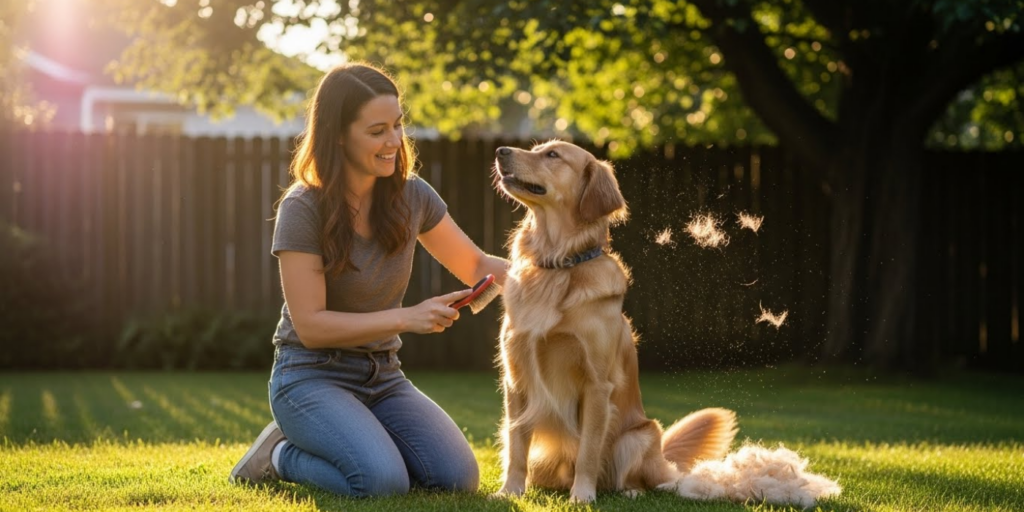
Here’s a mindset shift: instead of seeing shedding as a chore, reframe it as quality time with your dog. Grooming sessions offer calm, focused interaction in our busy lives.
Many dogs find brushing deeply relaxing—especially when paired with soft words, gentle hands, and treats. It’s a chance to check for lumps, ticks, or skin changes while reinforcing trust. Over time, your dog may seek out the brush, knowing it means attention and care.
Try this: play soothing music, sit on the porch at sunset, and make brushing a ritual. You’re not just removing fur—you’re telling your dog, “I’ve got you.”
Plus, less stress = less shedding. Dogs pick up on tension. If you’re frustrated by the mess, they may become anxious, which can actually increase hair loss. Stay patient, laugh at the fur tumbleweeds, and remember: this phase passes.
In the grand scheme, a few weeks of extra fur is a small price to pay for the joy your dog brings every day.
Conclusion
Seasonal shedding is a natural, unavoidable part of dog ownership—but it doesn’t have to overwhelm you. By understanding your dog’s coat cycle, committing to consistent grooming, supporting their health from the inside out, and managing your home wisely, you can sail through shedding season with minimal stress and maximum connection.
We’ve covered how to identify normal vs. problematic shedding, choose the right tools, nourish your dog’s skin and coat, reduce household mess, and even transform grooming into a loving ritual. Each of these steps not only controls fur but also contributes to your dog’s overall well-being.
So this season, don’t just reach for the lint roller—reach for the brush, the fish oil, and your calmest mindset. Your dog’s comfort (and your sanity) depend on it.
Now we’d love to hear from you: What’s your go-to trick for managing dog hair? Does your pup have a favorite grooming tool? Share your best tips or funniest shedding story in the comments below—because every dog parent could use a little solidarity (and a good vacuum recommendation)! 🐕✨

Mary Brown is a devoted pet enthusiast with a lifelong passion for animals of all kinds. From volunteering at local shelters to creating cozy, enriching spaces for her own furry family, she believes that every pet deserves love, comfort, and attentive care. With years of hands-on experience and a heart full of empathy, Mary shares practical tips and heartfelt insights to help fellow pet parents nurture happier, healthier lives for their companions.