Introduction
Picture this: The doorbell rings. Before you can grab the leash or issue a command, your dog barrels toward the door—tail wagging, paws flying—and launches himself at your unsuspecting guest. Coffee spills. Your friend jumps back. And you’re left apologizing while trying to wrestle a 60-pound bundle of joy off someone’s shoulders.
Sound familiar?
Dog jumping is one of the most common—and frustrating—behavioral issues pet owners face. While it often stems from excitement or affection, it can be uncomfortable, startling, or even dangerous (especially for children, seniors, or people with mobility issues). The good news? Jumping is a learned behavior—and it can be unlearned.
In this guide, we’ll explore why dogs jump on people, how to prevent it consistently, and step-by-step training techniques that actually work—even for the most enthusiastic greeters. Whether your dog is a puppy full of zoomies or an adult who’s been jumping for years, you’ll find practical, humane strategies to teach polite greetings that keep everyone safe, happy, and coffee-stain-free.
Let’s turn those airborne welcomes into calm, four-on-the-floor hellos.
Why Dogs Jump: Understanding the Root Cause
Before you can fix the behavior, it helps to understand why your dog does it in the first place.
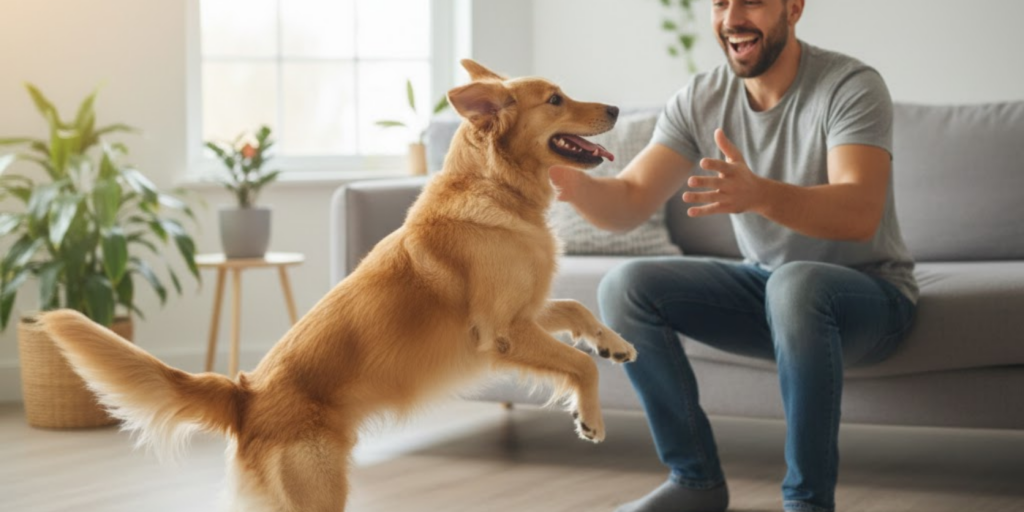
Dogs don’t jump to be rude—they jump because it works. From puppyhood, jumping gets attention. Think about it: When your dog leaps up, you (or your guest) likely react—by talking, pushing them away, making eye contact, or even laughing. To your dog, any attention is positive reinforcement, even if it’s scolding.
Puppies also learn early that jumping brings their face closer to ours. In dog-to-dog interactions, they greet face-to-face, so it’s natural for them to try the same with humans. Add in excitement, curiosity, or anxiety about new people, and you’ve got a perfect recipe for airborne greetings.
According to the American Kennel Club (AKC), over 70% of dog owners report jumping as a significant household challenge—especially during the first two years of a dog’s life. But here’s the key insight: Dogs repeat what gets rewarded. If jumping leads to interaction, it will continue.
Understanding this helps you shift your approach from punishment (“No! Down!”) to prevention and redirection—a far more effective and kinder path to change.
Fun fact: A 50-pound dog jumping at full speed can exert over 200 pounds of force—enough to knock over a small child or an elderly adult. That’s why addressing this behavior isn’t just about manners—it’s about safety.
The Power of Consistency: Setting Clear Expectations
One of the biggest mistakes owners make? Inconsistent responses. Sometimes they allow jumping when they’re in a good mood; other times they scold. To your dog, this is confusing. They can’t tell the difference between “happy jumping” and “bad jumping”—they just know jumping sometimes works.
The solution? Decide on a clear rule and stick to it—100% of the time.
The golden rule: All four paws must stay on the floor for attention. No exceptions. Not for “just this once.” Not for Grandma. Not when your dog is “extra excited.”
This requires everyone in your household—and frequent visitors—to be on the same page. If one person rewards jumping while another ignores it, your dog will keep trying, hoping the “yes” person shows up.
Start by teaching your dog an alternative behavior, like sitting or going to their mat when someone arrives. Then, only give attention when they’re calm. Turn your back, stay silent, and avoid eye contact the moment paws leave the ground. The second all four paws are down (or they sit), praise enthusiastically and offer a treat.
Pro tip: Practice with a friend! Have them stand calmly at the door while you guide your dog through the new routine. Repeat until your dog reliably sits or stays when the doorbell rings.
Consistency might feel tedious at first, but within a few weeks, your dog will start to anticipate the new rule—and choose calmness over chaos.
Step-by-Step Training: Teaching Polite Greetings
Now, let’s walk through a simple, effective training plan you can start today.
Step 1: Master “Sit” on Cue
Ensure your dog knows a solid “sit” command. Practice in low-distraction areas first, then gradually add movement (like walking toward them) and excitement (clapping, calling their name).
Step 2: Simulate Guest Arrivals
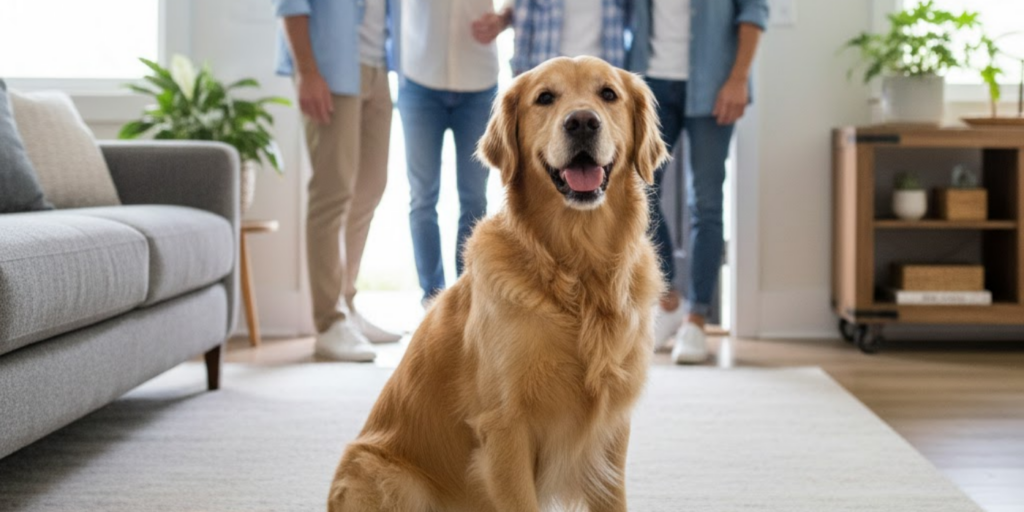
Have a helper ring the doorbell or knock. Before opening the door, put your dog on a leash (to prevent rehearsal of jumping). Ask for a “sit” and wait. Only open the door once your dog is calm.
Step 3: Manage the Interaction
When your guest enters, instruct them to ignore your dog completely until all four paws are on the floor. No talking, touching, or eye contact. The moment your dog sits or stands calmly, your guest can say hello and offer a treat—but only if your dog remains seated.
Step 4: Use a “Go to Your Spot” Cue (Optional but Powerful)
Teach your dog to go to a designated mat or bed when guests arrive. This is especially useful for high-energy or large breeds. Start by rewarding them for stepping on the mat, then build duration. Eventually, “Go to your spot” becomes their automatic response to the doorbell.
Step 5: Practice, Practice, Practice
Real change happens through repetition. Do short (3–5 minute) training sessions 2–3 times a week. Celebrate small wins—like your dog pausing for even one second before jumping.
Bonus trick: Keep a treat jar by the front door. It’s a visual reminder for you—and a quick reward system for your dog.
Remember: Patience beats punishment every time. Your goal isn’t to suppress your dog’s joy—it’s to channel it into polite behavior.
What Not to Do: Common Mistakes That Make Jumping Worse
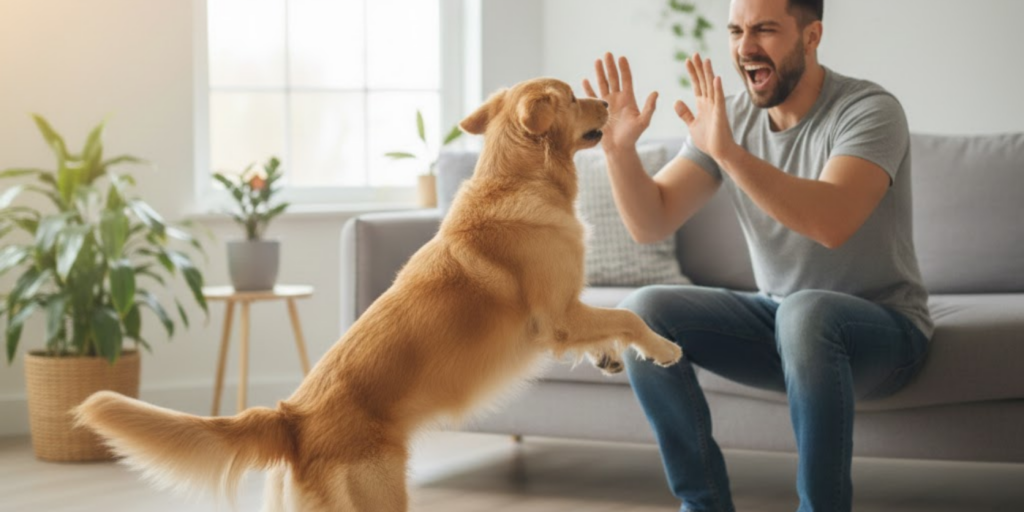
Even well-meaning owners accidentally reinforce jumping. Here are the top pitfalls to avoid:
- Pushing your dog away: This feels like play to many dogs—especially if you’re using your hands. It can increase arousal and encourage more jumping.
- Yelling “Down!” while making eye contact: Your tone might sound sharp, but your attention still rewards the behavior.
- Giving in “just this once”: One exception teaches your dog that persistence pays off.
- Using physical punishment: Knee raises, leash jerks, or alpha rolls create fear and damage trust—without teaching what to do instead.
Instead, remove reinforcement. Turn your back. Cross your arms. Stay silent. Make jumping boring. Then, make calm behavior irresistible with praise, pets, and treats.
Also, don’t skip exercise and mental stimulation. A dog bouncing off the walls may be under-exercised. A tired dog is a calmer dog—so ensure your pup gets enough physical activity and enrichment before guests arrive.
Real-life example: Sarah from Denver used to scold her Labrador, Buddy, every time he jumped. But Buddy only jumped harder. Once she switched to turning away silently and rewarding sits, he learned polite greetings in just 10 days.
Small shifts in your response lead to big changes in behavior.
Managing High-Energy or Anxious Jumpers
Some dogs jump not just from excitement—but from overstimulation or anxiety. Rescue dogs, herding breeds, or dogs with past trauma may leap up because they don’t know how to process new people.
In these cases, environmental management is key:
- Use a baby gate or crate to create distance during arrivals. Let your dog observe guests from a safe space before interacting.
- Keep greetings low-key. Ask guests to enter quietly, avoid direct eye contact at first, and crouch sideways (not face-on) to seem less threatening.
- Pair guest arrivals with positive associations. Give your dog a stuffed Kong or chew toy when someone knocks—this builds a “guests = good things” mindset.
For anxious jumpers, professional help from a certified positive-reinforcement trainer can be invaluable. They can design a customized desensitization plan that builds confidence without overwhelming your dog.
And remember: Progress isn’t linear. Some days will be better than others. Celebrate consistency over perfection.
Final Thoughts: Patience, Practice, and Partnership
Stopping your dog from jumping isn’t about control—it’s about communication. It’s about showing your dog, kindly and clearly, how to interact with the world in a way that’s safe and respectful for everyone.
Every calm greeting is a victory. Every ignored jump is a lesson. And every guest who walks in without being tackled is proof that your efforts are paying off.
More than that, this training strengthens your bond. Your dog learns to trust your guidance. You learn to read their cues. Together, you build a shared language of calm and connection.
Conclusion
Jumping may be natural for dogs, but that doesn’t mean it has to be permanent. By understanding the why behind the behavior, setting consistent boundaries, and teaching clear alternatives like sitting or going to a mat, you can transform chaotic entrances into peaceful greetings.
We’ve covered the root causes of jumping, the critical role of consistency, a step-by-step training plan, common mistakes to avoid, and special considerations for high-energy or anxious dogs. Now, it’s your turn to put these tools into practice.
Start small. Be patient. Celebrate progress. And remember: your dog isn’t being “bad”—they’re just doing what they’ve learned works. Your job is to teach them a better way.
We’d love to hear from you! Has your dog struggled with jumping? What strategies have worked (or failed) for you? Share your story in the comments below—your experience could inspire another pet parent to stick with training when it feels tough. And if you found this guide helpful, please share it with a fellow dog lover. Together, we can make every hello a happy—and grounded—one.

Mary Brown is a devoted pet enthusiast with a lifelong passion for animals of all kinds. From volunteering at local shelters to creating cozy, enriching spaces for her own furry family, she believes that every pet deserves love, comfort, and attentive care. With years of hands-on experience and a heart full of empathy, Mary shares practical tips and heartfelt insights to help fellow pet parents nurture happier, healthier lives for their companions.