Introduction
You’ve done your research. Maybe your vet recommended a new formula, or you’re finally upgrading to a higher-quality brand. Perhaps your dog has developed a food sensitivity, or you’re simply trying to match their changing nutritional needs as they age. Whatever the reason, you’re ready to switch your dog’s food—but your last attempt ended in a messy disaster: refusal to eat, upset stomach, or even a trip to the vet.
Sound familiar? You’re not alone. A sudden food switch is one of the most common causes of digestive upset in dogs—yet many owners don’t realize how sensitive a dog’s gut really is. Unlike humans, who can handle a spontaneous taco binge or a new smoothie trend, dogs thrive on consistency. Their digestive systems need time to adjust to new proteins, fibers, and ingredients.
The good news? With a thoughtful, gradual transition, you can switch your dog’s food safely, smoothly, and successfully—without the drama. In this guide, we’ll walk you through exactly how to do it: the ideal timeline, signs to watch for, common mistakes to avoid, and practical tips for picky eaters or dogs with sensitive stomachs. By the end, you’ll feel confident making dietary changes that support your dog’s long-term health—without the stress (or the cleanup).
Why Sudden Food Changes Cause Problems
Imagine if someone swapped your morning coffee and oatmeal for kimchi and seaweed overnight. Even if it’s “good for you,” your stomach might rebel. Dogs react the same way—but with fewer options for polite complaints.
A dog’s digestive tract relies on a stable community of gut bacteria to break down food efficiently. When you introduce a new kibble or formula too quickly, those microbes get disrupted. The result? Diarrhea, vomiting, gas, bloating, or loss of appetite—sometimes within hours.
According to the American Kennel Club, over 60% of digestive issues in otherwise healthy dogs are linked to abrupt diet changes. And while most cases resolve on their own, severe reactions can lead to dehydration or pancreatitis—especially in puppies, seniors, or dogs with pre-existing conditions.
That’s why gradual transition isn’t just recommended—it’s essential. Think of it as helping your dog’s gut “meet” the new food slowly, like introducing two friends at a party instead of throwing them into a crowded room and saying, “Figure it out!”
The 7-Day Transition Plan (And How to Customize It)
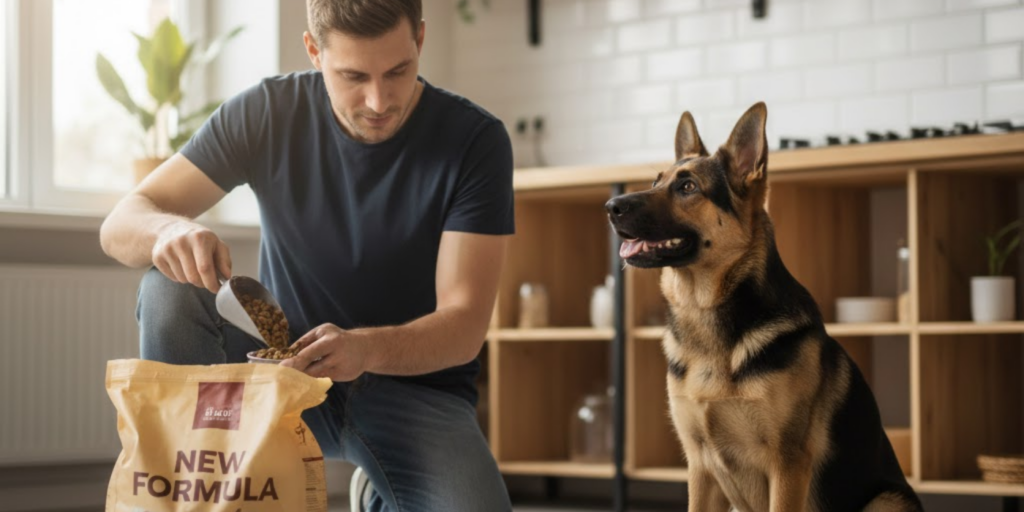
The gold standard for switching dog food is the 7-day gradual mix-in method. Here’s how it works:
- Days 1–2: 75% old food + 25% new food
- Days 3–4: 50% old food + 50% new food
- Days 5–6: 25% old food + 75% new food
- Day 7+: 100% new food
This slow blend gives your dog’s digestive system time to adapt while minimizing shock.
But every dog is different. For sensitive stomachs, puppies, or seniors, stretch the transition to 10–14 days, reducing the new food increment to 10–15% per step. For very picky eaters, you might even start with just a teaspoon of new food mixed in.
Tips for success:
- Mix thoroughly so your dog can’t pick out the old food.
- Use the same bowl and feeding routine to reduce anxiety.
- Monitor stool quality daily—soft is okay; liquid is not.
- Stick to scheduled meals (don’t free-feed during transition).
If your dog shows mild discomfort (slightly loose stool, quieter demeanor), slow down the process. If they vomit repeatedly, refuse all food for 24+ hours, or seem lethargic, pause the switch and consult your vet.
Special Cases: When Standard Transitions Aren’t Enough
Not all food changes follow the same rules. Here’s how to handle common scenarios:
1. Switching Between Kibble and Raw or Wet Food
These have very different moisture and fat content. When moving to raw or wet diets, extend the transition to 10–14 days and consider adding a canine probiotic to support gut health. Never mix raw and kibble in the same meal—they digest at different rates, which can cause fermentation and gas.
2. Food Allergies or Medical Diets
If your vet prescribed a hydrolyzed or limited-ingredient diet for allergies, follow their exact instructions. Some therapeutic foods require an “all-or-nothing” switch under supervision. Never mix with old food unless approved.
3. Picky Eaters Who Refuse New Food
Try warming the new food slightly (enhances aroma), adding low-sodium bone broth, or hand-feeding a few bites as a “treat.” But avoid overdoing toppings—they can create new pickiness! Stay consistent: if they skip a meal, pick it up after 20 minutes. Hunger often wins.
4. Emergency Switches (Recalls, Spoilage, etc.)
If you must switch immediately due to a recall or spoiled bag, fast your dog for 12–24 hours (with water), then start with small amounts of the new food. Offer boiled chicken and rice for the first day if needed, then slowly introduce the new kibble.
Flexibility and observation are your best tools—not rigid timelines.
What to Watch For: Red Flags vs. Normal Adjustments
During a food transition, some changes are normal. Others signal trouble.
✅ Normal (temporary):
- Slightly softer stool for 1–2 days
- Mild increase in gas
- Brief decrease in appetite
- Slight change in energy level
❌ Warning signs (call your vet):
- Vomiting more than once
- Watery diarrhea lasting over 24 hours
- Blood in stool or vomit
- Lethargy or weakness
- Refusing all food for more than 24 hours
Pro tip: Keep a simple “transition journal.” Note daily food ratios, stool consistency (use a 1–5 scale), and behavior. It helps you track progress and gives your vet useful data if issues arise.
Also, remember: hydration is critical during transitions. Always provide fresh water, and consider adding ice cubes or bone broth (no onion/garlic!) to encourage drinking if your dog seems off.
Common Mistakes That Sabotage Food Transitions
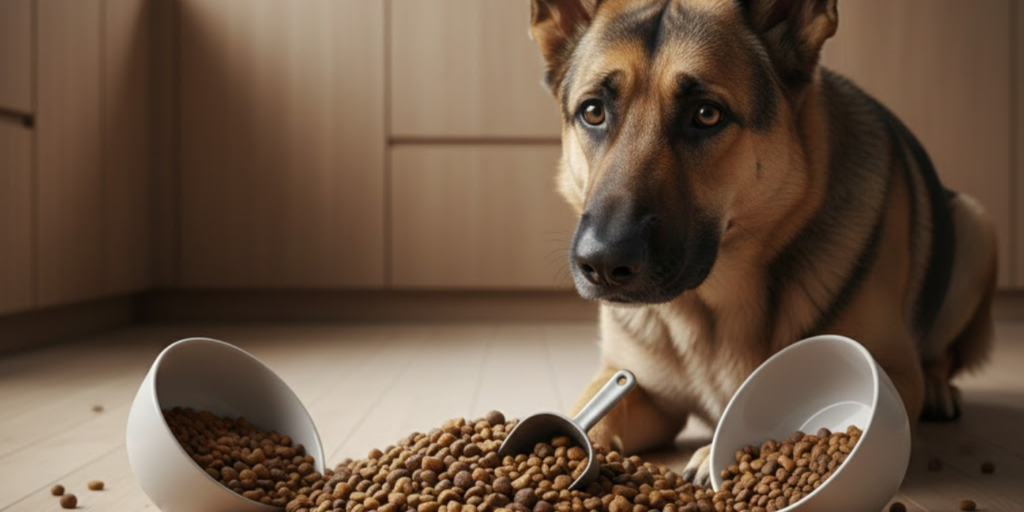
Even well-intentioned owners make these errors:
1. Rushing the Process
“I’ll just mix half-and-half for two days!”—this is the #1 cause of upset stomachs. Patience pays off.
2. Inconsistent Portions
Guessing amounts leads to uneven ratios. Use a kitchen scale or measuring cups for accuracy.
3. Adding Too Many “Boosters”
While a spoon of pumpkin or yogurt can help, overloading with supplements, oils, or toppers during transition can overwhelm the gut. Keep it simple.
4. Ignoring Ingredient Shock
Switching from chicken-based to fish-based food (or plant-based to meat-heavy) is a bigger leap than same-protein formulas. Check labels: the first 3 ingredients matter most.
5. Forgetting Treats and Chews
If your dog’s old treats contain the same allergen or protein you’re avoiding, they can undermine the whole switch. Temporarily pause treats or switch them too.
Small details make a big difference—especially when gut health is on the line.
Making the New Food Irresistible (Without Creating New Problems)
You want your dog to love their new food—but not become so finicky they’ll only eat it smothered in bacon grease. Here’s how to encourage acceptance without bad habits:
- Warm it slightly: 10 seconds in the microwave (stir well!) releases aroma.
- Add moisture: A splash of warm water or low-sodium broth softens kibble and boosts smell.
- Hand-feed the first few bites: Creates positive association.
- Use puzzle feeders: Makes eating engaging, not just routine.
- Stay calm and upbeat: Dogs pick up on anxiety. Act like the new food is the best thing ever.
Avoid:
- Constantly switching brands if they hesitate (teaches them to hold out)
- Free-feeding during transition (makes portion control impossible)
- Using high-fat human foods as bribes (risks pancreatitis)
Remember: most dogs adapt within a few days once they realize this is the new normal—and the only option.
The Bigger Picture: Nutrition as Preventive Care
Switching food isn’t just about preference—it’s one of the most powerful tools you have for your dog’s long-term health. The right diet can:
- Reduce allergy symptoms
- Support joint health in seniors
- Improve coat shine and skin health
- Aid weight management
- Boost energy and immune function
By learning to transition foods safely, you’re not just avoiding messes—you’re empowering yourself to make proactive, informed choices throughout your dog’s life. Puppies become adults, adults become seniors, and needs change. Your ability to adapt their diet calmly and correctly ensures they thrive at every stage.
Conclusion
Switching your dog’s food doesn’t have to be stressful—for you or your pup. With a gradual 7-day (or longer) transition, careful observation, and a few smart strategies, you can introduce new nutrition smoothly and safely. Remember: consistency, patience, and attention to your dog’s signals are your greatest allies.
Whether you’re upgrading ingredients, addressing a health issue, or simply responding to your dog’s changing needs, this process is an act of care. Every measured scoop, every stool check, every calm reassurance during a hesitant meal—it all adds up to a healthier, happier dog.
So take a deep breath. Grab your measuring cup. And trust that with the right approach, your dog will not only accept their new food—they’ll flourish on it.
We’d love to hear from you! Have you successfully switched your dog’s food? What tips worked for your picky eater or sensitive stomach pup? Share your story in the comments below—and if this guide helped you, pass it on to a fellow dog parent navigating their own food transition. Here’s to happy tummies and wagging tails!

Mary Brown is a devoted pet enthusiast with a lifelong passion for animals of all kinds. From volunteering at local shelters to creating cozy, enriching spaces for her own furry family, she believes that every pet deserves love, comfort, and attentive care. With years of hands-on experience and a heart full of empathy, Mary shares practical tips and heartfelt insights to help fellow pet parents nurture happier, healthier lives for their companions.