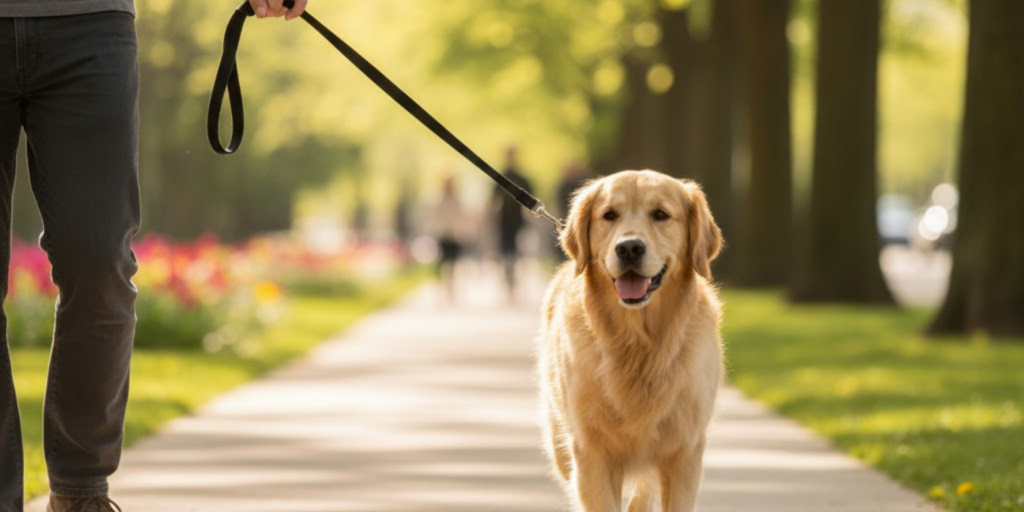
Ever feel like you’re not walking your dog—you’re being walked by your dog? If your daily stroll turns into a tug-of-war, with your pup lunging at squirrels, pulling toward every passing person, or zigzagging like a pinball, you’re not alone. Many dog owners dream of a peaceful, relaxed walk where their dog stays close, responds to cues, and actually enjoys the time together. The good news? That dream is absolutely within reach—with patience, consistency, and the right approach.
In this guide, you’ll learn practical, step-by-step techniques to teach your dog to walk calmly beside you—no fancy equipment or professional trainer required (though they can help!). We’ll break down why dogs pull in the first place, how to choose the right gear, and how to use positive reinforcement to build focus and self-control. Along the way, you’ll discover how calm walks improve not just your outings, but your entire relationship with your dog.
Whether you have an excitable puppy or a seasoned puller, the journey to leash manners starts with one step—literally. Let’s take it together.
Why Dogs Pull on the Leash (And Why It’s Not “Bad Behavior”)
Before you can fix the pulling, it helps to understand why it happens. Contrary to popular belief, your dog isn’t being “stubborn” or “disrespectful.” In most cases, pulling is simply reinforced by the environment—and by us, often without realizing it.
Dogs pull because it works. Every time your dog surges forward and reaches a fire hydrant, a sniff spot, or another dog, pulling is rewarded. Even tension on the leash can become a habit: many dogs learn that a tight leash = moving forward, while a loose leash = stopping. So they keep pulling to keep going.
Additionally, walks are often the highlight of a dog’s day—their main source of mental stimulation, physical exercise, and sensory input. Imagine being cooped up all day and finally getting to explore the world… only to be told to walk slowly in a straight line! It’s no wonder they get overexcited.
Understanding this is key: pulling isn’t defiance—it’s enthusiasm mixed with learned behavior. That shift in perspective makes training more compassionate and effective. Instead of punishing your dog for pulling, you’ll teach them a better way to get what they want: attention, movement, and exploration—all while staying calm by your side.
Choosing the Right Gear: Leash, Collar, and Harness
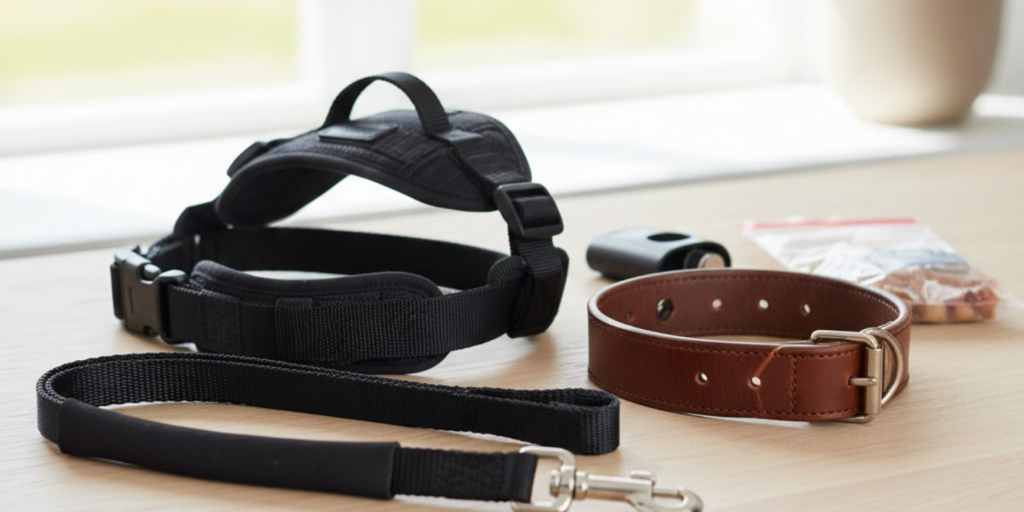
The right equipment can make a huge difference—not as a quick fix, but as a supportive tool during training.
Start with a standard 4- to 6-foot leash (not retractable). Retractable leashes encourage pulling by allowing too much freedom and creating constant tension. A flat leash gives you better control and clearer communication.
For collars and harnesses, safety and comfort come first. Avoid choke chains, prong collars, or shock collars—they may suppress pulling temporarily but can cause physical harm, fear, or aggression. Instead, opt for:
- Front-clip harnesses (like the Freedom Harness or Ruffwear Front Range): These gently redirect your dog back toward you when they pull, without choking.
- Head halters (like the Gentle Leader): These work like a horse’s halter, guiding the dog’s head. They require gradual introduction and proper fit, but many find them effective for strong pullers.
- Well-fitted back-clip harnesses or flat collars: Fine for dogs who already have decent leash manners or are in early training—just avoid using them with heavy pullers, as back-clip harnesses can actually encourage pulling by distributing force across the chest.
No tool replaces training—but the right one can reduce frustration while your dog learns.
The Foundation: Teaching Loose-Leash Walking Step by Step
Loose-leash walking (LLW) means your dog walks with a slack leash, staying near your side without pulling. Here’s how to teach it, one small success at a time:
Step 1: Start indoors
Begin in a low-distraction environment like your living room. With your dog on leash, stand still. Wait. The moment the leash goes slack—even for a second—say “Yes!” and give a treat. Repeat. You’re teaching: slack leash = good things happen.
Step 2: Add movement
Take one step forward. If your dog stays with you and the leash is loose, reward. If they surge ahead, stop immediately. Stand still until the leash loosens again, then reward and move on. You control the movement: forward only when the leash is loose.
Step 3: Introduce a cue
Once your dog gets the pattern, add a verbal cue like “Let’s go” or “Walk.” Say it as you start moving. Over time, they’ll associate the word with walking calmly beside you.
Step 4: Increase difficulty slowly
Move to your backyard, then quiet sidewalks, then busier areas. Always train below your dog’s threshold—if they’re too excited to focus, you’ve moved too fast.
Keep sessions short (5–10 minutes) and upbeat. End on a success! Consistency beats duration: three 5-minute sessions a day work better than one long, frustrating walk.
Common Mistakes (And How to Avoid Them)
Even well-meaning owners accidentally reinforce pulling. Here are the top pitfalls—and how to sidestep them:
- Letting your dog “say hello” while pulling
If your dog lunges toward people or dogs and you eventually give in, you’ve taught them that pulling works. Instead, only allow greetings when your dog is calm and the leash is loose—or skip greetings during training walks. - Yanking or jerking the leash
This creates tension, fear, or resistance. Instead of pulling back, stop moving. Become a tree. Wait for your dog to turn and create slack, then reward. - Inconsistent rules
If pulling gets your dog to the park on Monday but earns a time-out on Tuesday, they’ll be confused. Set clear expectations every walk. - Expecting perfection too soon
Real progress takes weeks or months. Celebrate tiny wins: a few steps of slack leash, a glance back at you, a pause before lunging.
Training isn’t about obedience—it’s about communication. Every walk is a conversation. Make it kind, clear, and rewarding.
Advanced Tips for Stubborn Pullers or Reactive Dogs
If your dog isn’t just pulling—but lunging, barking, or growling at triggers (other dogs, bikes, joggers)—you’re dealing with reactivity, not just excitement. The same LLW principles apply, but with extra layers:
- Increase distance from triggers. If your dog reacts at 20 feet, start training at 50 feet—where they notice but don’t lose control.
- Use high-value treats (like chicken or cheese) to compete with distractions.
- Practice “look at that” (LAT): When your dog sees a trigger but stays calm, mark and reward. This builds emotional control.
- Keep walks short and structured, focusing on calm behavior rather than distance covered.
In these cases, consider working with a certified positive-reinforcement trainer. Reactive behavior often stems from fear or frustration, and professional guidance can prevent setbacks.
Remember: a dog who walks calmly beside you isn’t “obedient”—they’re confident, connected, and trusting.
The Bigger Picture: What Calm Walks Really Give You
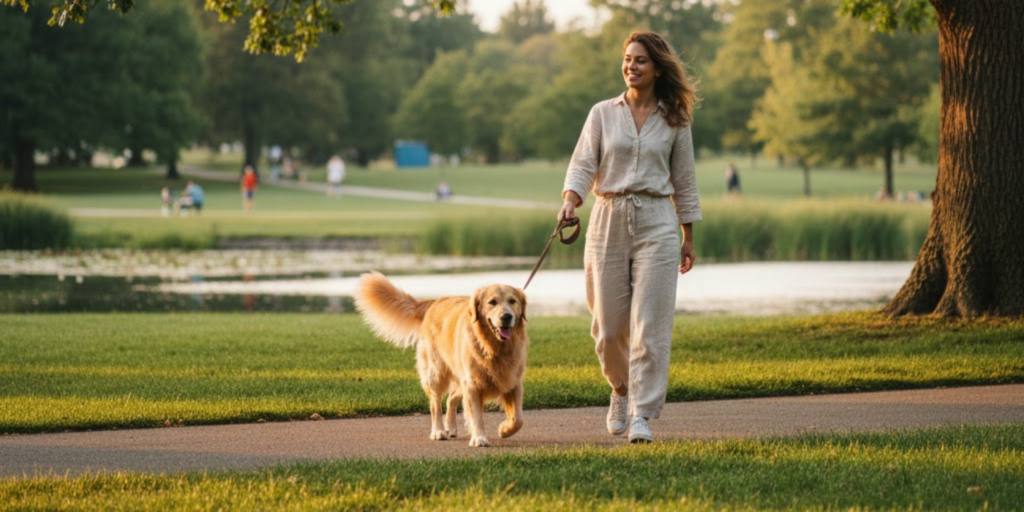
Training your dog to walk calmly beside you isn’t just about easier walks—it transforms your entire relationship. That shared focus, mutual respect, and peaceful rhythm build a bond that goes far beyond the leash.
You’ll notice benefits everywhere:
- Your dog becomes more responsive to cues in daily life.
- Walks become relaxing for both of you—no more sore shoulders or frayed nerves.
- Your dog learns impulse control, which helps with door dashing, counter surfing, and other common issues.
- You’ll feel proud watching your dog choose calmness in a chaotic world.
More than that, you’re giving your dog a gift: the ability to explore the world safely, without overwhelm or punishment. And in return, you get a companion who walks through life—literally and figuratively—right by your side.
So the next time you clip on that leash, remember: you’re not just going for a walk. You’re building trust, one calm step at a time.
Conclusion: Start Small, Stay Consistent, Celebrate Progress
Teaching your dog to walk calmly beside you is one of the most rewarding things you can do together. It starts with understanding why they pull, choosing supportive gear, and using positive reinforcement to reward the behavior you want—not punish the behavior you don’t.
Keep your training sessions short, upbeat, and consistent. Focus on progress, not perfection. And remember: every dog learns at their own pace. A senior rescue may take longer than a young pup, and that’s okay.
The journey to calm walks isn’t always linear—but every loose-leash step is a victory worth celebrating. With time, your walks will transform from chaotic struggles into peaceful, connected moments you both look forward to.
Ready to try it? Grab your leash, some tasty treats, and head out your front door with patience and a smile. And if you’ve already made progress—or hit a roadblock—we’d love to hear about it! Share your story in the comments below. Your experience could inspire another dog parent to keep going.

Mary Brown is a devoted pet enthusiast with a lifelong passion for animals of all kinds. From volunteering at local shelters to creating cozy, enriching spaces for her own furry family, she believes that every pet deserves love, comfort, and attentive care. With years of hands-on experience and a heart full of empathy, Mary shares practical tips and heartfelt insights to help fellow pet parents nurture happier, healthier lives for their companions.