Introduction
You’re halfway through your grilled chicken sandwich when your dog gives you that look—big, soulful eyes, head tilted, tail thumping gently against the floor. It’s hard to resist sharing a bite. After all, you love your dog, and it feels like a harmless treat. But not everything on your plate is safe for them. While some human foods are perfectly fine (and even beneficial) for dogs, others can be toxic—even deadly.
The good news? You don’t have to say “no” to every scrap. In fact, many everyday foods in your kitchen can be healthy, low-cost additions to your dog’s diet when given in moderation. The key is knowing what’s safe, what’s risky, and how to serve it responsibly.
In this guide, we’ll walk you through a curated list of human foods dogs can safely enjoy, explain the benefits of each, and highlight important caveats (like portion size and preparation). We’ll also remind you of a few common kitchen items to never share. By the end, you’ll feel confident offering your pup the occasional tasty—and nutritious—human snack without worry. Let’s turn those pleading eyes into opportunities for smart, loving choices.
Why Knowing Safe Human Foods Matters
Many dog owners assume commercial kibble is the only appropriate food—and while a balanced dog food should form the foundation of your pup’s diet, occasional human food can offer variety, enrichment, and even health perks. For example, plain pumpkin can ease digestive upset, and blueberries provide antioxidants that support brain health.
However, misinformation abounds. Some people think “natural = safe,” but that’s not always true (looking at you, garlic and grapes). Others avoid all human food out of fear, missing out on simple, wholesome options.
Understanding which foods are safe helps you:
- Respond confidently to your dog’s begging (without guilt or risk)
- Provide natural remedies for minor issues (like an upset stomach)
- Enrich your dog’s diet with vitamins, fiber, or protein
- Avoid emergency vet visits due to accidental poisoning
Important rule: Even safe foods should be given in small amounts and without added salt, sugar, spices, or fats. Always introduce new foods gradually to monitor for allergies or digestive upset.
Safe Fruits Your Dog Can Enjoy
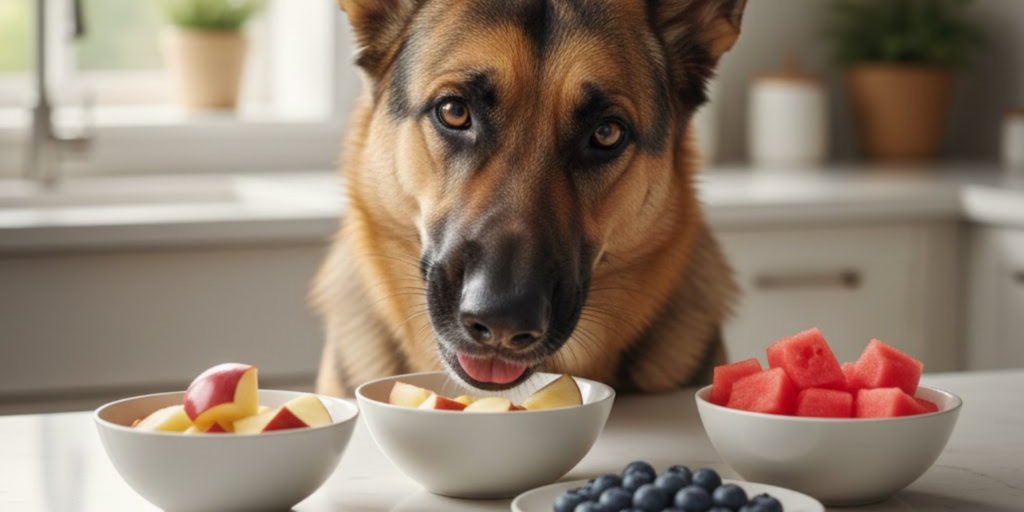
Fruits are nature’s candy—and many are safe (and healthy) for dogs when prepared correctly.
1. Apples
High in fiber, vitamin A, and vitamin C. Remove the core and seeds first—apple seeds contain trace amounts of cyanide. Slice into bite-sized pieces to prevent choking.
2. Blueberries
Tiny but mighty! Packed with antioxidants, they support immune health and may even slow aging in dogs. Great as a frozen summer treat.
3. Bananas
Rich in potassium and vitamins, but high in sugar—so offer only small slices occasionally. Many dogs love the creamy texture.
4. Watermelon
A hydrating summer favorite! Just remove the rind and seeds (which can cause blockages). Serve in cubes for a refreshing snack.
5. Strawberries
Full of fiber and vitamin C. Chop them up or mash them into your dog’s food for a sweet boost.
⚠️ Fruits to avoid: Grapes, raisins, and currants—even in tiny amounts—can cause sudden kidney failure in dogs. Cherries (except the flesh) contain cyanide in the pits, stems, and leaves.
Tip: Freeze safe fruit pieces for a cool, engaging treat on hot days. Your dog will love licking and crunching them!
Safe Vegetables That Double as Healthy Snacks
Most dogs enjoy veggies, especially when they’re steamed or lightly cooked. These are low-calorie, nutrient-rich options perfect for overweight dogs or as training rewards.
1. Carrots
Crunchy, sweet, and full of beta-carotene. Great for dental health, too! Serve raw (sliced) or steamed. Many pups love chewing on whole baby carrots.
2. Green Beans
Low in calories but high in fiber and vitamins. Serve plain—never canned with added salt. A favorite vet-recommended snack for dogs on weight-loss plans.
3. Pumpkin (plain, canned)
Not pumpkin pie filling! Plain pureed pumpkin helps regulate digestion—use it for both constipation and diarrhea. Just 1–2 tablespoons per meal can make a big difference.
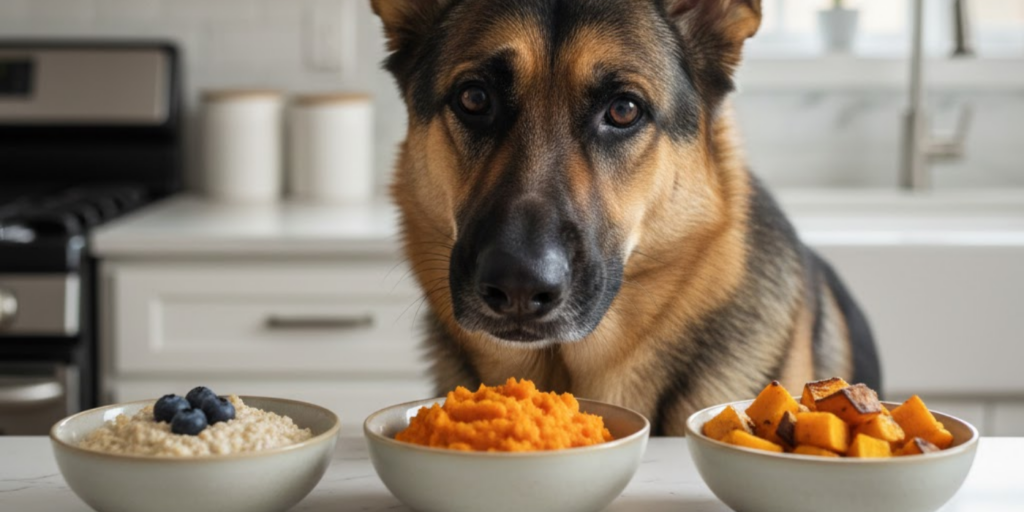
4. Sweet Potatoes
Cooked and unseasoned, they’re rich in fiber and vitamins A, C, and B6. Avoid raw—they’re hard to digest. Mash or bake into small cubes.
5. Broccoli
Safe in small amounts. Contains vitamin C and fiber, but the florets contain isothiocyanates, which can cause gastric irritation if overfed. Stick to tiny portions.
6. Peas
Green peas, snow peas, and snap peas are all safe and full of protein, vitamins, and minerals. Just skip canned varieties with salt.
Pro tip: Blend steamed veggies into a “pup smoothie” with plain yogurt or bone broth for picky eaters.
Protein-Powered Human Foods Dogs Can Eat
Lean proteins are excellent for muscle health and energy—especially for active or senior dogs.
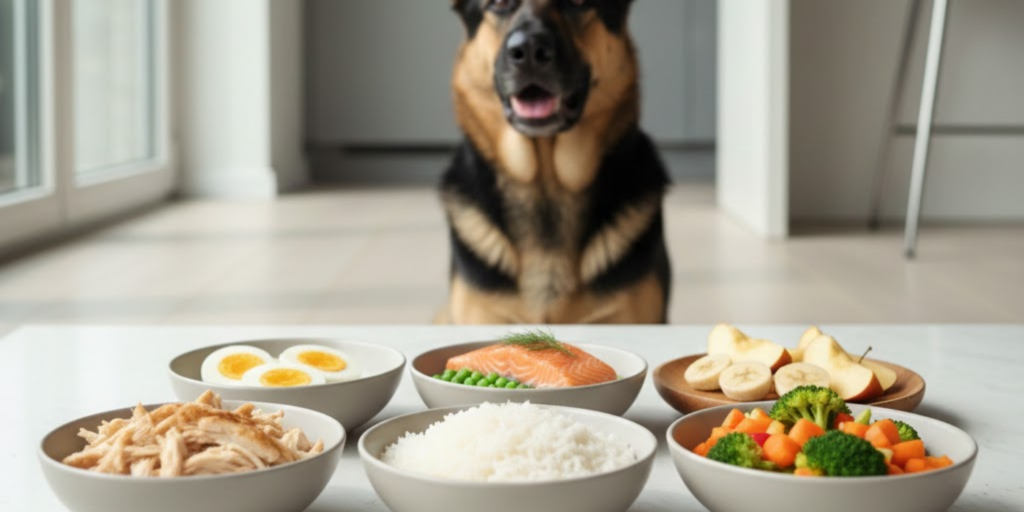
1. Cooked Chicken
Plain, boneless, skinless chicken is a go-to for dogs with upset stomachs or food sensitivities. It’s easily digestible and rich in protein. Always cook thoroughly—never give raw or undercooked poultry due to salmonella risk.
2. Turkey
Another lean option, especially during holidays. Remove skin, bones, and all seasoning. Avoid deli turkey—it’s loaded with sodium and preservatives.
3. Eggs
Cooked eggs (scrambled or boiled) are a complete protein source with essential amino acids. They also contain healthy fats and vitamins. Never feed raw eggs regularly—they can lead to biotin deficiency.
4. Plain Yogurt or Cottage Cheese
In moderation, these provide probiotics for gut health and calcium for bones. Choose unsweetened, plain varieties. Avoid if your dog is lactose intolerant (watch for gas or diarrhea).
5. Fish (like salmon or sardines)
Cooked, boneless salmon is rich in omega-3 fatty acids, which support skin, coat, and joint health. Sardines (packed in water, no salt) are a great occasional treat. Never feed raw fish or fish with bones.
⚠️ Never give: Bacon, ham, or fatty meats—they’re high in salt and fat, which can cause pancreatitis.
Foods You’d Never Expect—But Are Actually Safe
Some surprising kitchen staples are dog-friendly when served properly:
- Oatmeal: Plain, cooked oatmeal (no sugar or flavorings) is a great source of soluble fiber, especially for older dogs with bowel irregularities.
- Rice: White or brown rice is gentle on the stomach. Often combined with boiled chicken for dogs recovering from vomiting or diarrhea.
- Peanut Butter: A classic favorite! Choose unsalted, xylitol-free peanut butter. Xylitol (a common sugar substitute) is deadly toxic to dogs—even in tiny amounts. Always check the label.
- Popcorn: A few plain, air-popped kernels (no butter, salt, or oil) are fine as an occasional treat. Avoid unpopped kernels—they’re a choking hazard.
Caution: “Safe” doesn’t mean “free-for-all.” Even healthy foods can cause weight gain or digestive issues if overfed. As a rule, human foods should make up no more than 10% of your dog’s daily calories.
Common Human Foods That Are Dangerous (and Why)
For every safe food, there’s a risky one hiding in plain sight. Here’s a quick reminder of what never to share:
- Chocolate: Contains theobromine, which dogs can’t metabolize. Causes vomiting, seizures, or death.
- Onions, Garlic, Leeks: Part of the allium family—they damage red blood cells and can cause anemia.
- Grapes & Raisins: No one knows exactly why, but they can lead to kidney failure within 24 hours.
- Avocado: The flesh is mostly safe in small amounts, but the pit, skin, and leaves contain persin, which can cause vomiting. Many vets recommend avoiding it altogether.
- Alcohol & Caffeine: Even small amounts can be fatal.
- Xylitol: Found in sugar-free gum, candy, and some peanut butters. Causes a rapid insulin spike—leading to liver failure.
When in doubt, skip it. And keep the ASPCA Animal Poison Control number (888-426-4435) saved in your phone.
How to Safely Introduce Human Foods to Your Dog’s Diet
Start slow and smart:
- Consult your vet, especially if your dog has health issues like diabetes, kidney disease, or food allergies.
- Offer a tiny amount (e.g., a pea-sized piece) and wait 24 hours to check for vomiting, diarrhea, or itching.
- Serve plain: No butter, oil, salt, spices, garlic, or sauces. What’s healthy for you isn’t always healthy for them.
- Mind the portion: A Chihuahua’s “treat” is a lick; a Great Dane’s is a spoonful. Adjust accordingly.
- Use as enrichment: Stuff a Kong with mashed banana and peanut butter, or freeze broth with blueberries for a puzzle-like snack.
Remember: dog food is formulated to be complete and balanced. Human foods are extras—not meal replacements.
Real-Life Benefits: Stories from Dog Owners
Take Emma from Arizona. Her senior Labrador, Duke, struggled with constipation. Her vet suggested adding a tablespoon of plain pumpkin to his meals. Within two days, his digestion improved—and he loved the taste.
Or consider Javier in Michigan, who used frozen green beans as low-calorie training treats while helping his rescue pup lose weight. “He lost 8 pounds in three months, and his energy came back,” Javier shared.
These simple swaps show how safe human foods, used wisely, can support real health outcomes.
Conclusion
Sharing your food with your dog doesn’t have to be risky—or forbidden. With the right knowledge, you can safely offer your pup nutritious, tasty additions that enhance their diet and strengthen your bond. From blueberries and carrots to plain chicken and pumpkin, many everyday human foods are not only safe but beneficial when served correctly.
The key takeaways? Always avoid toxic foods, skip the seasonings, control portions, and introduce new items gradually. And never let human snacks replace a balanced, vet-approved dog food.
Your dog’s health is worth the extra attention. So next time those puppy-dog eyes lock onto your plate, you’ll know exactly what you can—and can’t—share with peace of mind.
Now we’d love to hear from you: What’s your dog’s favorite safe human food? Have you used any of these as a remedy or treat? Share your go-to snack in the comments below—and if this guide helped, pass it on to a fellow dog lover! After all, a little knowledge goes a long way in keeping our furry friends happy, healthy, and wagging.

Mary Brown is a devoted pet enthusiast with a lifelong passion for animals of all kinds. From volunteering at local shelters to creating cozy, enriching spaces for her own furry family, she believes that every pet deserves love, comfort, and attentive care. With years of hands-on experience and a heart full of empathy, Mary shares practical tips and heartfelt insights to help fellow pet parents nurture happier, healthier lives for their companions.