Introduction
Think you know all the dog breeds out there? You’ve seen Golden Retrievers on Instagram, Bulldogs in movies, and Poodles at the park—but what about the Lagotto Romagnolo, the Thai Ridgeback, or the Peruvian Inca Orchid? These aren’t mythical creatures; they’re real, living dog breeds with fascinating histories, unique traits, and devoted global fan clubs. Yet, most people have never even heard their names.
While popular breeds dominate shelters and pet stores, rare dog breeds offer something special: distinct looks, ancient lineages, and personalities shaped by centuries of isolated development. Some were royal companions; others were fearless hunters or silent guardians of remote villages. Today, many are at risk of disappearing altogether.
In this article, we’ll introduce you to seven rare dog breeds you’ve probably never heard of—each with its own story, temperament, and charm. We’ll also explore why preserving these breeds matters, what to consider before bringing one home, and how you can support their conservation. Whether you’re a curious dog lover or dreaming of a truly one-of-a-kind companion, get ready to expand your canine horizons beyond the usual suspects.
Because sometimes, the rarest gems are the ones nobody’s talking about—yet.
What Makes a Dog Breed “Rare”?
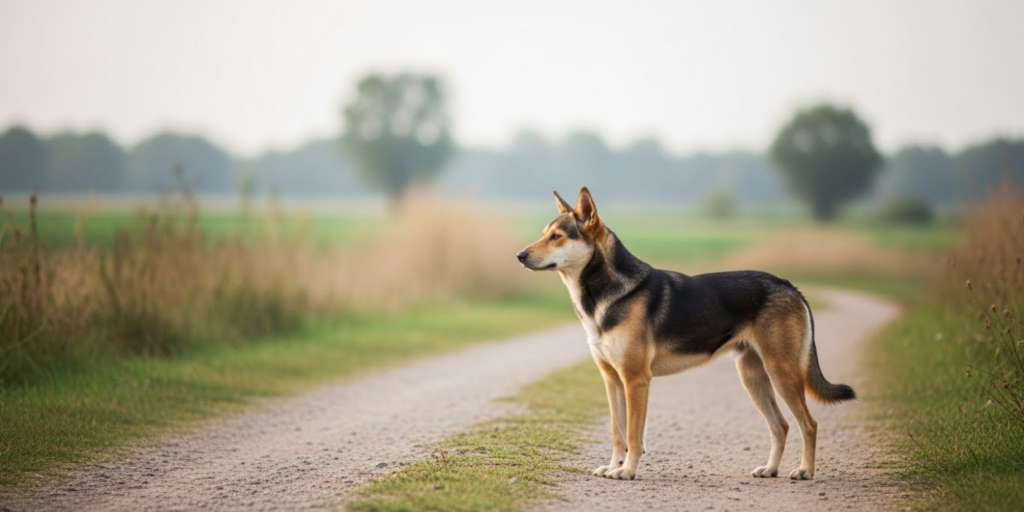
Before we meet these hidden treasures, let’s clarify: what does “rare” actually mean in the dog world?
A breed is typically considered rare when it has few registered individuals worldwide, limited recognition by major kennel clubs (like the American Kennel Club or Fédération Cynologique Internationale), or is native to a small geographic region with little global exposure.
For example, the Norwegian Lundehund—bred to hunt puffins on steep cliffs—has fewer than 1,500 individuals left. The Cesky Terrier, developed in Czechoslovakia in the 1940s, is so uncommon that only about 600 are born worldwide each year.
Rarity isn’t about quality—it’s about visibility. Many rare breeds are incredibly healthy, intelligent, and well-adapted to specific roles or climates. But because they weren’t mass-marketed or suited to urban living, they never gained mainstream popularity.
It’s also worth noting: rare doesn’t mean “designer”. Unlike trendy crossbreeds (like Labradoodles), rare breeds are purebred, with documented pedigrees and centuries of selective breeding behind them.
Understanding this distinction helps us appreciate these dogs not as novelties, but as living pieces of cultural and biological heritage.
1. The Lagotto Romagnolo: Italy’s Truffle-Hunting Genius
Hailing from Italy’s Romagna region, the Lagotto Romagnolo (pronounced la-GO-toh roh-mahn-YOH-loh) looks like a curly teddy bear—but don’t let the cuteness fool you. This small, woolly dog was originally bred as a water retriever, but today, it’s the only breed in the world officially recognized as a truffle hunter.
With an extraordinary sense of smell and an eager-to-please attitude, Lagottos can locate precious white truffles buried deep underground—a skill that once supported entire rural economies. Their dense, waterproof coat protects them in damp forests, and their expressive eyes seem to understand human emotion.
Temperament: Intelligent, affectionate, and energetic. They thrive on mental challenges and bond deeply with their families.
Size: 24–35 lbs, 16–19 inches tall
Fun fact: Their name comes from “lago” (lake), reflecting their original waterfowl-retrieving roots.
While still uncommon in the U.S., the AKC officially recognized the Lagotto in 2015, sparking growing interest among dog lovers who want a smart, hypoallergenic companion with a job to do.
Ideal for: Active households that enjoy hiking, scent games, or even backyard “truffle hunts” (using hidden treats!).
2. The Thai Ridgeback: A Silent Guardian from Southeast Asia
Imagine a sleek, muscular dog with a short coat, pricked ears, and a strip of hair growing backward along its spine—that’s the Thai Ridgeback, one of the world’s oldest and most primitive breeds. Originating in Thailand over 3,000 years ago, these dogs were village guardians, hunters, and even royal protectors.
Unlike many breeds that bark to alert, the Thai Ridgeback is famously quiet—relying on vigilance and physical presence rather than noise. They’re fiercely loyal to their family but reserved with strangers, making them excellent watchdogs without being aggressive.
Temperament: Independent, alert, and deeply devoted. They need early socialization and confident handling.
Size: 35–75 lbs, 20–24 inches tall
Unique trait: The “ridge” (a genetic hallmark shared with the Rhodesian Ridgeback) is a sign of purity—and rare outside Southeast Asia.
Sadly, due to urbanization and crossbreeding, pure Thai Ridgebacks are now endangered in their homeland. International breed clubs are working to preserve their lineage, but they remain extremely rare outside Thailand.
Note: Not ideal for first-time owners—this is a thinking dog who respects leadership, not obedience for obedience’s sake.
3. The Peruvian Inca Orchid: Hairless and Historic
This ancient hairless breed might look like a modern art sculpture, but the Peruvian Inca Orchid (or Perro Sin Pelo del Perú) has roots stretching back to pre-Incan civilizations. Pottery and textiles from 750 A.D. depict these sleek, elegant dogs, believed to bring healing and good luck.
They come in hairless and coated varieties, with the hairless type requiring special skincare (sunscreen in summer, sweaters in winter!). Their skin is warm to the touch—leading to their traditional role as “healers” who slept with sick or arthritic people.
Temperament: Loyal, sensitive, and intuitive. They form intense bonds and dislike being left alone.
Size: Comes in small (under 10 lbs), medium (10–20 lbs), and large (20–55 lbs)
Cultural significance: Peru declared them a national heritage breed in 2001.
Despite their striking appearance, they’re virtually unknown in North America. But fans praise their quiet dignity and cat-like agility.
Care tip: Their skin needs weekly moisturizing and protection from extreme temperatures—definitely not a low-maintenance pet!
4. The Norwegian Lundehund: The Puffin Dog with Six Toes
Few dogs are as biologically unique as the Norwegian Lundehund. Bred to scale sheer cliffs and hunt puffins (yes, real seabirds!) along Norway’s rugged coast, this spitz-type dog has six fully functional toes on each foot, incredibly flexible shoulders, and the ability to tip its head backward until it touches its spine!
These adaptations helped it navigate narrow rock crevices and grip slippery surfaces—skills no other breed possesses. After puffin hunting declined in the 20th century, the breed nearly went extinct (only 6 survived at one point!). Thanks to dedicated breeders, it’s slowly recovering.
Temperament: Alert, curious, and playful—but can be stubborn. Early training is key.
Size: 13–16 lbs, 12–15 inches tall
Quirk: Their digestive system is unusually sensitive, requiring specialized diets.
If you’re looking for a dog that’s literally one-of-a-kind in anatomy and history, the Lundehund is it. But be warned: they’re not easy to find, and responsible breeders often have long waiting lists.
5. The Mudi: Hungary’s Versatile Farm Dog
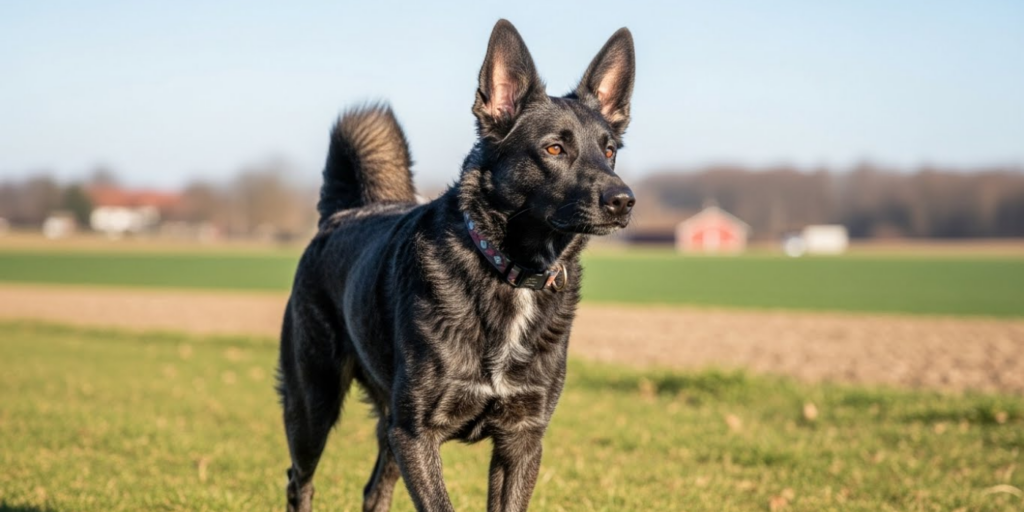
Often mistaken for a mix between a Puli and a Border Collie, the Mudi (pronounced MOO-dee) is actually a distinct Hungarian herding breed known for its courage, agility, and versatility. Farmers used Mudis to herd sheep, hunt vermin, and even guard property—all with boundless energy and sharp intelligence.
They have a wavy, medium-length coat that comes in unique colors like merle, black, or ash-gray. Their expressive faces and alert stance make them look perpetually ready for action.
Temperament: Energetic, vocal, and eager to work. Boredom leads to mischief!
Size: 18–29 lbs, 15–19 inches tall
Recognition: Only recently acknowledged by the AKC (2022), though they’ve existed since the 19th century.
Mudis excel in dog sports like agility, obedience, and flyball. They’re deeply loyal but need an experienced owner who can provide structure and stimulation.
Why they’re rare: Overshadowed by more famous Hungarian breeds like the Komondor or Vizsla, the Mudi remains a hidden gem—even in Europe.
Why Preserving Rare Breeds Matters
You might wonder: why should we care about preserving these obscure breeds when millions of mixed-breed dogs need homes?
The answer lies in biodiversity and cultural heritage. Each rare breed represents a unique genetic pool shaped by centuries of adaptation. Losing them means losing traits that could help future generations—like disease resistance, climate resilience, or specialized working abilities.
Moreover, these dogs are living links to human history. The Thai Ridgeback reflects Southeast Asian village life; the Peruvian Inca Orchid embodies pre-Columbian spirituality; the Lundehund tells a story of survival in one of Earth’s harshest environments.
Support doesn’t always mean ownership. You can:
- Follow and share rare breed clubs on social media
- Donate to preservation organizations
- Educate others about genetic diversity in dogs
Even if you adopt a shelter mutt (which we fully support!), appreciating rare breeds helps protect the full spectrum of canine life on Earth.
Should You Get a Rare Breed? Things to Consider
While rare breeds are captivating, they’re not for everyone. Before falling in love with a photo, ask yourself:
- Can you find a responsible breeder? Many rare breeds have few ethical breeders, and scams are common. Avoid anyone who ships puppies instantly or won’t let you visit.
- Are you prepared for special needs? Hairless dogs need skincare; primitive breeds may be harder to train; some have dietary sensitivities.
- Will you be able to find vet care or supplies? Certain genetic screenings or grooming tools may not be locally available.
- Are you adopting for the right reasons? Don’t choose a rare dog just to stand out. Choose one whose temperament and needs align with your lifestyle.
Alternative idea: Volunteer with or foster for rare breed rescues. Groups like the Lundehund Club of America or the Thai Ridgeback Rescue often need temporary homes.
Remember: owning a rare breed comes with the responsibility of being an ambassador for its survival.
Conclusion
From truffle-hunting Italians to cliff-climbing Norwegians, rare dog breeds remind us that the canine world is far richer and more diverse than popular culture suggests. Each of these breeds carries a story—of ancient civilizations, rugged landscapes, and the deep bond between humans and dogs.
We’ve explored the Lagotto Romagnolo, Thai Ridgeback, Peruvian Inca Orchid, Norwegian Lundehund, and Mudi—not just as curiosities, but as intelligent, capable companions with unique needs and gifts. We’ve also considered why preserving them matters and what to think through before bringing one home.
Whether you dream of sharing your life with one of these rare wonders or simply want to appreciate their place in our world, your awareness helps keep their legacy alive.
Now we’d love to hear from you: Which of these rare breeds surprised you the most? Have you ever met one in person? Share your thoughts or questions in the comments below—and if you learned something new, pass this article on to a fellow dog lover who’s ready to go beyond the basics! 🐾

Mary Brown is a devoted pet enthusiast with a lifelong passion for animals of all kinds. From volunteering at local shelters to creating cozy, enriching spaces for her own furry family, she believes that every pet deserves love, comfort, and attentive care. With years of hands-on experience and a heart full of empathy, Mary shares practical tips and heartfelt insights to help fellow pet parents nurture happier, healthier lives for their companions.