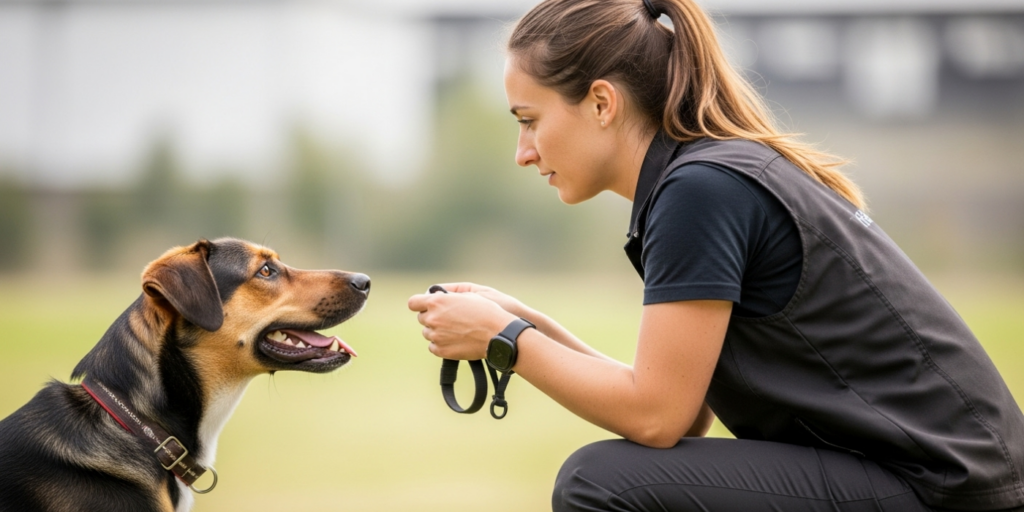
You call your dog’s name—again. They’re sniffing a leaf, chasing a butterfly, or barking at a squirrel two blocks away. You’ve practiced “sit” a hundred times at home, but the moment you step outside, it’s like your dog has never heard the word before.
If this sounds familiar, you’re not failing as a trainer. Your dog isn’t being stubborn—they’re simply overwhelmed, under-motivated, or unprepared for distraction. The good news? Focus isn’t something your dog either has or doesn’t have. It’s a skill you can build together, one small step at a time.
In this guide, we’ll walk you through proven, positive-reinforcement-based steps to dramatically improve your dog’s focus during training—whether you’re teaching basic obedience, preparing for agility, or just trying to walk without being dragged down the street. You’ll learn how to capture attention in distracting environments, choose the right rewards, build focus from the ground up, and turn everyday moments into training opportunities.
Because a dog who looks to you for guidance isn’t just well-behaved—they’re confident, connected, and calm.
Why Focus Is the Foundation of All Good Training
Before diving into techniques, it’s important to understand: focus comes before commands. You can’t teach “stay” if your dog isn’t even looking at you. In dog training, attention isn’t optional—it’s the first behavior you shape.
Without focus:
- Commands get ignored
- Distractions win every time
- Training feels frustrating for both of you
With focus:
- Your dog checks in with you naturally
- New skills are learned faster
- Real-world reliability becomes possible
💡 Real Example: Luna, a 1-year-old Lab mix, used to bolt after squirrels on walks. Her owner didn’t start with “recall”—she started with “watch me.” After two weeks of short focus games, Luna began glancing back voluntarily. Within a month, she’d come running when called—even with squirrels nearby.
Key Insight: Focus isn’t about control—it’s about connection. When your dog chooses to look at you in a world full of distractions, that’s trust in action.
Step 1: Master the “Name Game” (Your Secret Attention Tool)
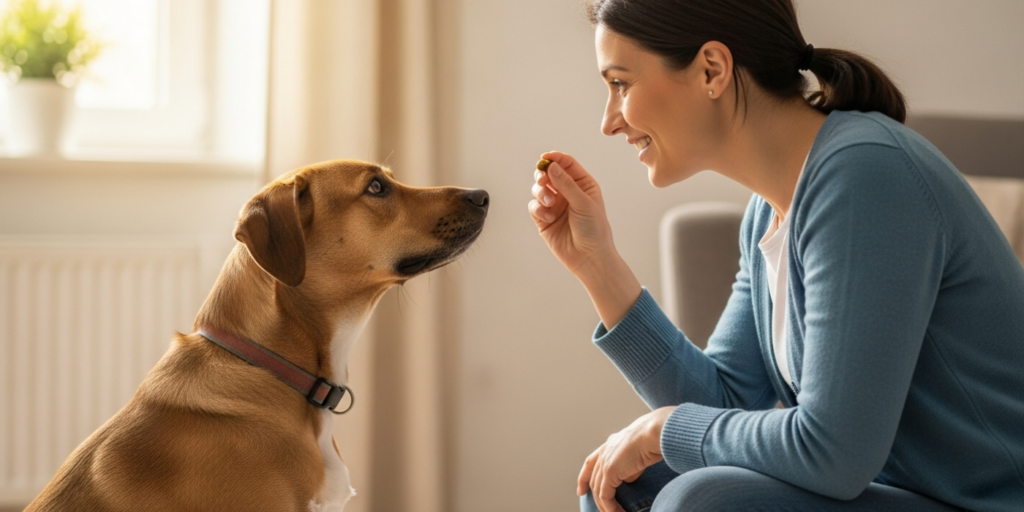
Your dog’s name should mean “Look at me—something good is about to happen!”—not “Uh-oh, I’m in trouble.”
✅ How to Play the Name Game:
- Say your dog’s name in a happy, upbeat tone.
- The instant they turn to look at you, mark it (“Yes!” or click) and give a treat.
- Repeat 5–10 times, several times a day—in low-distraction areas first (like your living room).
🐾 Pro Tips:
- Use high-value treats (boiled chicken, cheese, freeze-dried liver)
- Keep sessions under 2 minutes—end while your dog is still eager
- Never say your dog’s name angrily or repeatedly (“Buddy! Buddy! BUDDY!”)—this teaches them to ignore it
📈 Progression: Once your dog reliably looks when you say their name at home, practice in the backyard, then on quiet sidewalks. Gradually increase distraction level.
This simple game builds a reflexive attention response—the bedrock of all advanced training.
Step 2: Use High-Value Rewards (Not Just Kibble)
If your dog ignores you for a dropped french fry, your training treats aren’t motivating enough. Focus requires incentive—especially around distractions.
✅ Upgrade Your Reward Strategy:
- At home: Soft, smelly treats like boiled hot dog or Zuke’s Mini Naturals
- In public: Ultra-high-value rewards like cooked chicken, cheese, or salmon
- For life rewards: Access to toys, sniffing, or play can also be reinforcers
🧠 Science Note: A 2023 study in Journal of Veterinary Behavior found dogs trained with high-value food rewards showed 3x faster attention response in distracting environments than those given kibble.
⚠️ Important: Reserve the best rewards only for training. This keeps their value high—and your dog eager to work.
Remember: You’re not bribing your dog. You’re paying them for a job—and focus is hard work!
Step 3: Build Focus Gradually with the “Look at That” Game
Dogs don’t learn focus by avoiding distractions—they learn by practicing near them safely. The “Look at That” (LAT) game, developed by trainer Leslie McDevitt, teaches dogs to glance at a distraction, then look back at you for a reward.
✅ How to Play LAT:
- At a distance where your dog notices but doesn’t react to a distraction (e.g., another dog 50 feet away), say “Look!”
- When your dog glances at the distraction, wait. The moment they look back at you, mark and reward.
- Repeat, slowly decreasing distance over days/weeks.
🌟 Why It Works: LAT turns distractions into predictable cues for rewards, not triggers for chaos. Your dog learns: “That dog means treats are coming—from my person!”
🐕 Real Win: A reactive Shih Tzu named Milo went from lunging at skateboards to calmly looking at his owner whenever he saw one—thanks to daily LAT sessions.
This game builds emotional control, not just obedience.
Step 4: Keep Sessions Short, Sweet, and Successful
Dogs learn best through frequent, positive, bite-sized sessions—not marathon drills. Overtraining kills focus.
✅ Ideal Training Session Structure:
- Length: 3–5 minutes for puppies; 5–10 minutes for adults
- Frequency: 2–4 times per day (e.g., before meals, during commercial breaks)
- End on a win: Always stop after a success, not frustration
📉 Signs of Mental Fatigue:
- Sniffing the ground excessively
- Yawning or turning away
- Slow or sloppy responses
💡 Pro Tip: Use a timer. It’s shocking how quickly 5 minutes pass—but it’s enough for real progress.
Quality > quantity. Three 5-minute sessions beat one 30-minute slog every time.
Step 5: Teach a “Focus” or “Watch Me” Cue
Once your dog is offering eye contact regularly, put it on cue.
✅ How to Add the Cue:
- Wait for your dog to look at you naturally.
- Say “Watch me” (or “Focus”) as they’re making eye contact.
- Mark and reward.
- After 10–15 reps, say the cue before they look. Reward only if they make eye contact after the word.
👀 Criteria Progression:
- Start with 1 second of eye contact
- Gradually build to 3, 5, then 10 seconds
- Add mild distractions (e.g., clapping softly) once solid
🌍 Real-World Use: Use “Watch me” before crossing the street, entering a store, or when another dog approaches. It’s your reset button in chaotic moments.
This cue gives you a reliable way to reconnect anytime, anywhere.
Step 6: Manage the Environment (Set Your Dog Up to Succeed)
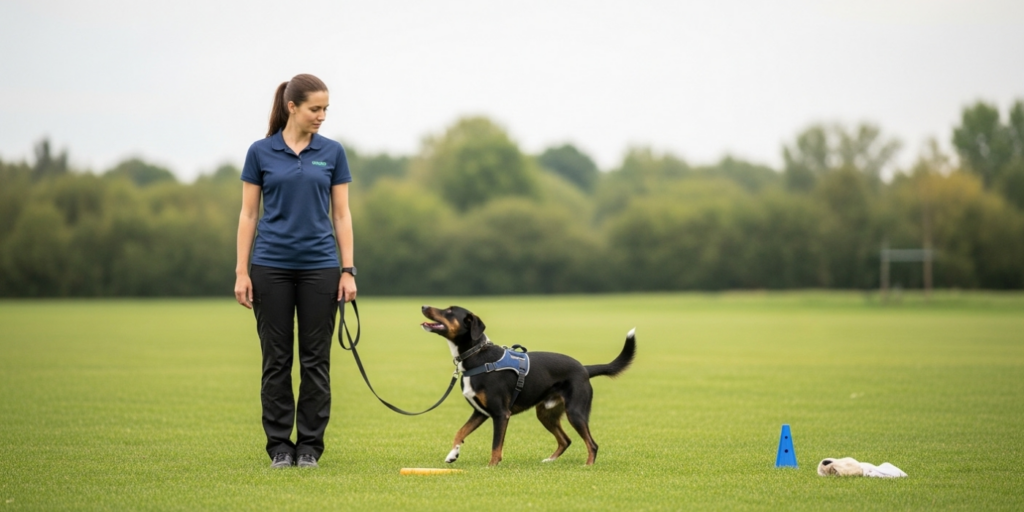
You wouldn’t teach a child to read in a disco—and you shouldn’t expect focus in overwhelming environments. Control the challenge level.
✅ Environment Management Tips:
- Train indoors first, then fenced yard, then quiet street
- Avoid training near dog parks, schools, or busy intersections early on
- Use barriers (baby gates, leashes) to prevent rehearsal of unwanted behaviors
🚫 Critical Rule: If your dog is too distracted to respond, you’re too close to the trigger. Back up until they can succeed.
🧩 Analogy: Focus is like muscle. You start with light weights (low distraction) and gradually increase resistance. Jumping to heavy weights too soon leads to injury—or shutdown.
Patience isn’t passive—it’s strategic.
Step 7: Make Focus a Lifestyle (Not Just a “Training” Thing)
The best focus happens when your dog chooses to check in with you throughout the day—not just when you have treats.
✅ Turn Daily Life into Focus Practice:
- Ask for eye contact before putting down their food bowl
- Reward a glance when you’re watching TV
- Say “Watch me” before opening the front door
❤️ Relationship-Building: These micro-moments teach your dog that you’re the source of all good things—not just during “training time.”
📈 Long-Term Payoff: Dogs with strong everyday focus are less likely to develop reactivity, anxiety, or impulse-control issues.
Focus isn’t a trick—it’s a lifestyle of connection.
Troubleshooting Common Focus Challenges
Even with the best plan, setbacks happen. Here’s how to handle them:
❌ My dog stares at treats, not my face
→ Hold treats at your eye level. Reward only when they look at your eyes—not your hand.
❌ My dog ignores me outside
→ You’ve moved too fast. Go back to a less distracting environment and rebuild.
❌ My dog gets overexcited with high-value treats
→ Switch to lower-value rewards (like kibble) for focus work, and use high-value only for recalls or emergency cues.
🛠️ Golden Rule: If your dog isn’t succeeding, lower the criteria. Make it easier, not harder.
Progress isn’t linear—but consistency always wins.
Final Thoughts: Focus Is a Gift of Trust
When your dog chooses to look at you in a world full of squirrels, smells, and sounds, they’re giving you a gift. They’re saying, “I trust you more than my impulses.”
That kind of connection doesn’t happen overnight. It’s built in quiet moments, tiny rewards, and patient repetition. But every “watch me” you earn, every glance back on a walk, every calm sit in a busy room—it all adds up to a dog who isn’t just obedient, but deeply bonded to you.
So start small. Play the name game today. Reward one voluntary look. And remember: you’re not just teaching focus—you’re building a relationship.
Your dog is watching. Are you ready to lead?
What’s your biggest focus challenge with your dog? Have you seen a breakthrough moment that surprised you? Share your story or questions in the comments below! Your experience could be the spark another dog parent needs to keep training with hope. 🐾✨

Mary Brown is a devoted pet enthusiast with a lifelong passion for animals of all kinds. From volunteering at local shelters to creating cozy, enriching spaces for her own furry family, she believes that every pet deserves love, comfort, and attentive care. With years of hands-on experience and a heart full of empathy, Mary shares practical tips and heartfelt insights to help fellow pet parents nurture happier, healthier lives for their companions.