Introduction
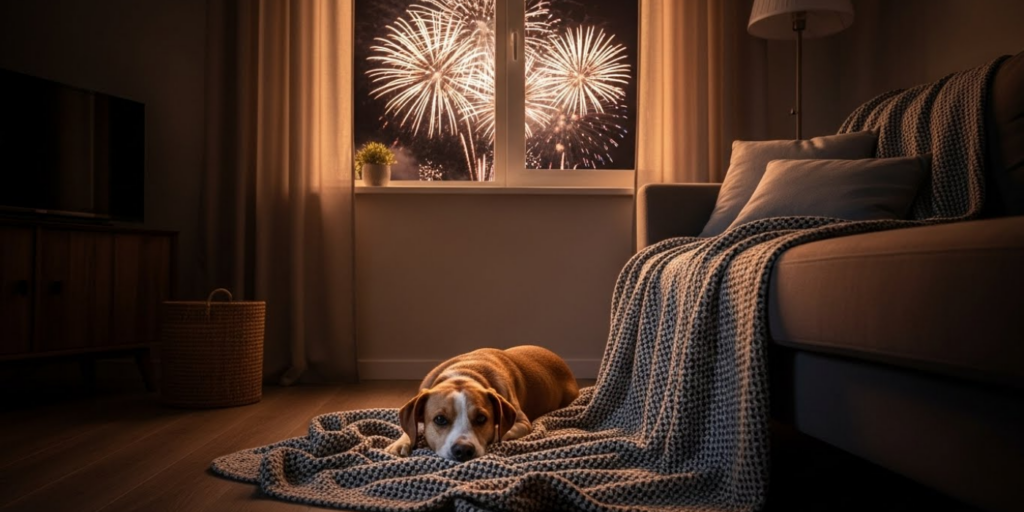
Imagine this: the sky lights up with a deafening boom, and your dog bolts under the bed, trembling, panting, or even trying to escape through a closed window. For many dogs, fireworks aren’t a celebration—they’re a full-blown nightmare. In fact, up to 45% of dogs show signs of noise phobia, with fireworks being one of the top triggers, according to the American Kennel Club.
If your pup turns into a bundle of nerves every time Independence Day, New Year’s Eve, or a local festival rolls around, you’re not alone—and more importantly, you’re not powerless. With the right strategies, you can dramatically reduce your dog’s stress and help them feel safe, even amid the chaos of popping, crackling, and booming skies.
In this article, we’ll share practical, vet-approved tricks to keep your dog calm during fireworks. From creating a cozy “safe zone” to using calming aids and behavior techniques, you’ll learn how to turn a night of anxiety into one of quiet comfort. Whether your dog mildly startles or completely panics, these tips are designed to meet them where they are—and give you peace of mind, too.
Let’s dive in and make the next fireworks display less frightening and more manageable—for both of you.
Why Fireworks Terrify Dogs (And Why It’s Not “Just Being Dramatic”)
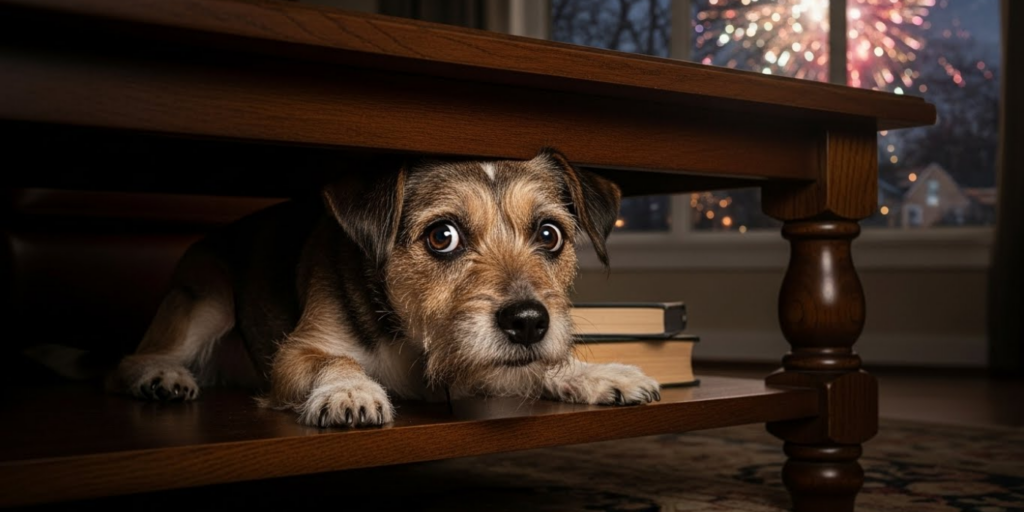
First, it’s important to understand why fireworks are so distressing to dogs. To us, they’re colorful and exciting. But to our canine companions, they’re unpredictable, painfully loud, and impossible to locate.
Dogs hear frequencies up to 65,000 Hz—nearly four times what humans can detect. A firework that sounds like a distant pop to you might register as a sudden, ear-splitting explosion to your dog. And because the noise comes from the sky with no visible source, they can’t rationalize it or flee from a clear threat. This creates a state of hypervigilance and panic.
Signs your dog is stressed by fireworks include:
- Pacing or restlessness
- Excessive panting or drooling
- Hiding or clinging to you
- Whining, barking, or shaking
- Attempting to escape (a leading cause of lost pets around holidays)
This isn’t “bad behavior”—it’s fear. Punishing or scolding your dog only deepens their anxiety. Instead, compassion and preparation are key.
Veterinarian Dr. Lisa Nguyen emphasizes: “Noise phobia is a real medical condition. Ignoring it can lead to long-term anxiety, even outside of firework season.”
Understanding your dog’s experience is the first step toward helping them feel safe.
Create a Safe, Sound-Buffered Sanctuary
One of the most effective ways to reduce firework anxiety is to control your dog’s environment. You can’t silence the sky, but you can create a quiet, comforting space indoors where the noise feels distant and manageable.
Start by choosing a room away from windows and exterior walls—ideally a basement, interior bathroom, or a closet. These spaces naturally absorb sound better than open living areas.
Then, soundproof the area as much as possible:
- Close windows and draw thick curtains
- Use rugs or blankets on hard floors to dampen echoes
- Play white noise, calming music, or a TV show to mask outdoor booms
Next, make it comforting. Lay down your dog’s favorite bed, blanket, and a few familiar toys. If your dog uses a crate and finds it comforting, place it in this room—but never force them into it. The goal is voluntary refuge, not confinement.
Pro tip: Introduce this “safe zone” days before fireworks happen. Let your dog explore it during calm times so it becomes associated with relaxation—not panic.
Some owners even build a “den” using cardboard boxes lined with blankets—a low-cost, cozy hideaway that many dogs instinctively gravitate toward.
Remember: your dog’s sanctuary should feel like a fortress of calm, not a prison. Keep the door open, and let them choose when to enter or leave.
Calming Aids That Actually Work (Backed by Science)
When environmental changes aren’t enough, calming aids can provide extra support. But with so many products on the market—from sprays to supplements—it’s hard to know what’s legit.
Here are the most research-backed options:
- ThunderShirts or Anxiety Wraps: These snug-fitting vests apply gentle, constant pressure to the dog’s torso, mimicking the soothing effect of swaddling a baby. Studies show they reduce anxiety in over 80% of dogs, though results vary by individual.
- Adaptil (Dog-Appeasing Pheromone): This synthetic copy of the pheromone mother dogs release to calm puppies is available as a diffuser, spray, or collar. It’s odorless to humans but signals “safety” to dogs. Many vets recommend plugging in a diffuser 3–7 days before an expected fireworks event.
- Calming Supplements: Look for formulas containing L-theanine, chamomile, tryptophan, or CBD (where legal and vet-approved). Brands like Zesty Paws, VetriScience, and Calm Paws have strong user reviews. Always consult your vet before giving supplements—especially if your dog is on medication.
- Prescription Anti-Anxiety Meds: For severely phobic dogs, medications like trazodone, gabapentin, or Sileo (an FDA-approved gel) can be life-changing. Sileo, applied to the gums, works within 30–60 minutes and is specifically designed for noise aversion.
Important: Never give human medications like Benadryl or melatonin without veterinary guidance. Dosage and safety vary widely by breed, size, and health status.
Think of calming aids as tools in your toolkit—not magic fixes. Used alongside a safe space and your reassuring presence, they can make a real difference.
Behavior Strategies: What to Do (and What NOT to Do)
Your response during fireworks matters—a lot. Many well-meaning owners accidentally worsen their dog’s fear by trying to “comfort” them in the wrong way.
What NOT to do:
- Say “It’s okay!” in a high-pitched, worried tone (this signals danger)
- Force interaction if your dog is hiding
- Punish barking or pacing (this increases stress)
- Act overly anxious yourself (dogs read your emotions closely)
What TO do:
- Stay calm, speak in a low, neutral voice
- Offer distractions: puzzle toys, long-lasting chews, or a favorite game
- Practice “counter-conditioning”: give high-value treats (like chicken or cheese) during booms so your dog associates noise with good things
- Let your dog seek comfort on their terms—whether that’s leaning against you or retreating to their crate
For long-term improvement, consider desensitization training. This involves playing recorded firework sounds at very low volumes while your dog is relaxed, then gradually increasing volume over weeks. Always stop before your dog shows stress. This method, guided by a certified trainer, can reduce noise sensitivity over time.
As dog behaviorist Maria Alvarez says: “Your dog doesn’t need you to fix the noise—they need you to be their anchor in the storm.”
Emergency Prep: Preventing Escapes and Injuries
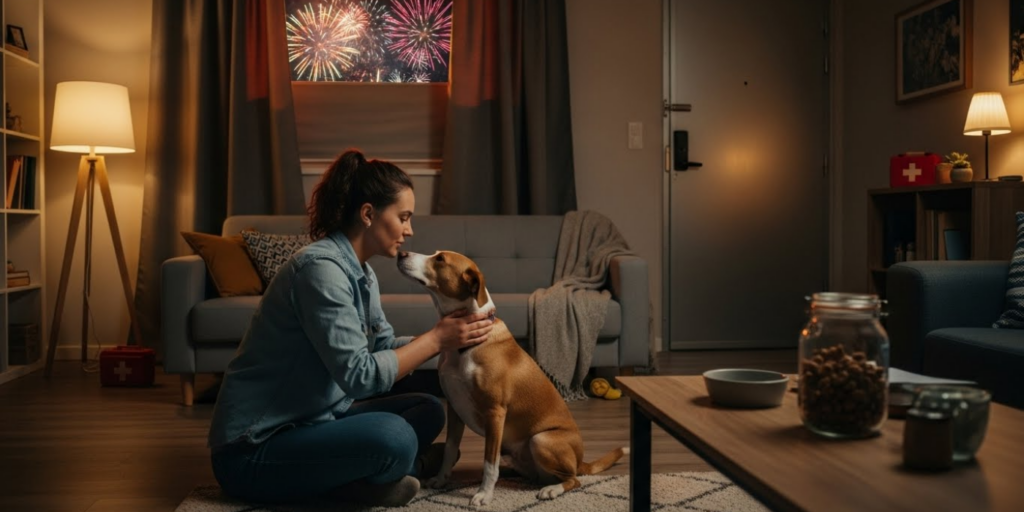
Sadly, July 5th is the busiest day of the year for animal shelters—not because of more pets being born, but because so many flee during fireworks and get lost.
To prevent tragedy:
- Ensure your dog is microchipped and that your contact info is up to date
- Double-check your collar ID tags—they should include your current phone number
- Keep your dog indoors several hours before and after fireworks begin
- Secure fences and gates—even calm dogs can become Houdinis when terrified
- Avoid walks during peak firework times (even on leashes, a panicked dog can slip free)
If your dog does escape, act fast:
- Alert local shelters and post on neighborhood apps (Nextdoor, Facebook)
- Use recent photos and mention their fear of loud noises
One heartwarming story: After a 4th of July scare, Buddy, a terrified Beagle, was found three blocks away—huddled under a porch, still wearing his Adaptil collar. His microchip led rescuers straight back to his relieved family.
Preparation isn’t paranoia—it’s protection.
A Note on Puppies and Prevention
If you have a puppy, you have a golden opportunity: prevent firework fear before it starts.
Between 3–14 weeks of age, puppies are in a critical socialization window. Gently exposing them to a variety of sounds—including distant thunder or low-volume firework recordings—can build resilience.
But don’t rush it. Always pair new sounds with positive experiences: feeding, petting, or play. If your pup shows signs of stress (whining, freezing, backing away), stop immediately and try again later at a lower volume.
Even for older dogs, early exposure to novel noises in a safe context can reduce future phobias. Think of it as building an “emotional immune system” against fear.
As one breeder puts it: “A calm reaction to noise isn’t luck—it’s training disguised as care.”
Conclusion
Fireworks don’t have to mean fear for your dog. By understanding their anxiety, creating a safe haven, using proven calming tools, responding with empathy, and preparing for emergencies, you can turn a night of terror into one of quiet security.
Remember: your dog isn’t “overreacting.” They’re asking for your help in the only way they know how. Meeting that need with patience and preparation is one of the deepest forms of love we can offer our pets.
This upcoming holiday season—or the next local celebration—try implementing even one or two of these tricks. You might be surprised how much calmer your dog feels… and how much more at ease you feel, too.
Now we’d love to hear from you!
What has worked (or hasn’t worked) for your dog during fireworks? Do you have a special ritual or product you swear by? Share your tips in the comments below—your experience could be the lifeline another dog parent needs. And if you found this guide helpful, please share it with a fellow dog lover. Together, we can make every celebration a little safer—and a lot kinder—for our four-legged friends. 🐶✨

Mary Brown is a devoted pet enthusiast with a lifelong passion for animals of all kinds. From volunteering at local shelters to creating cozy, enriching spaces for her own furry family, she believes that every pet deserves love, comfort, and attentive care. With years of hands-on experience and a heart full of empathy, Mary shares practical tips and heartfelt insights to help fellow pet parents nurture happier, healthier lives for their companions.